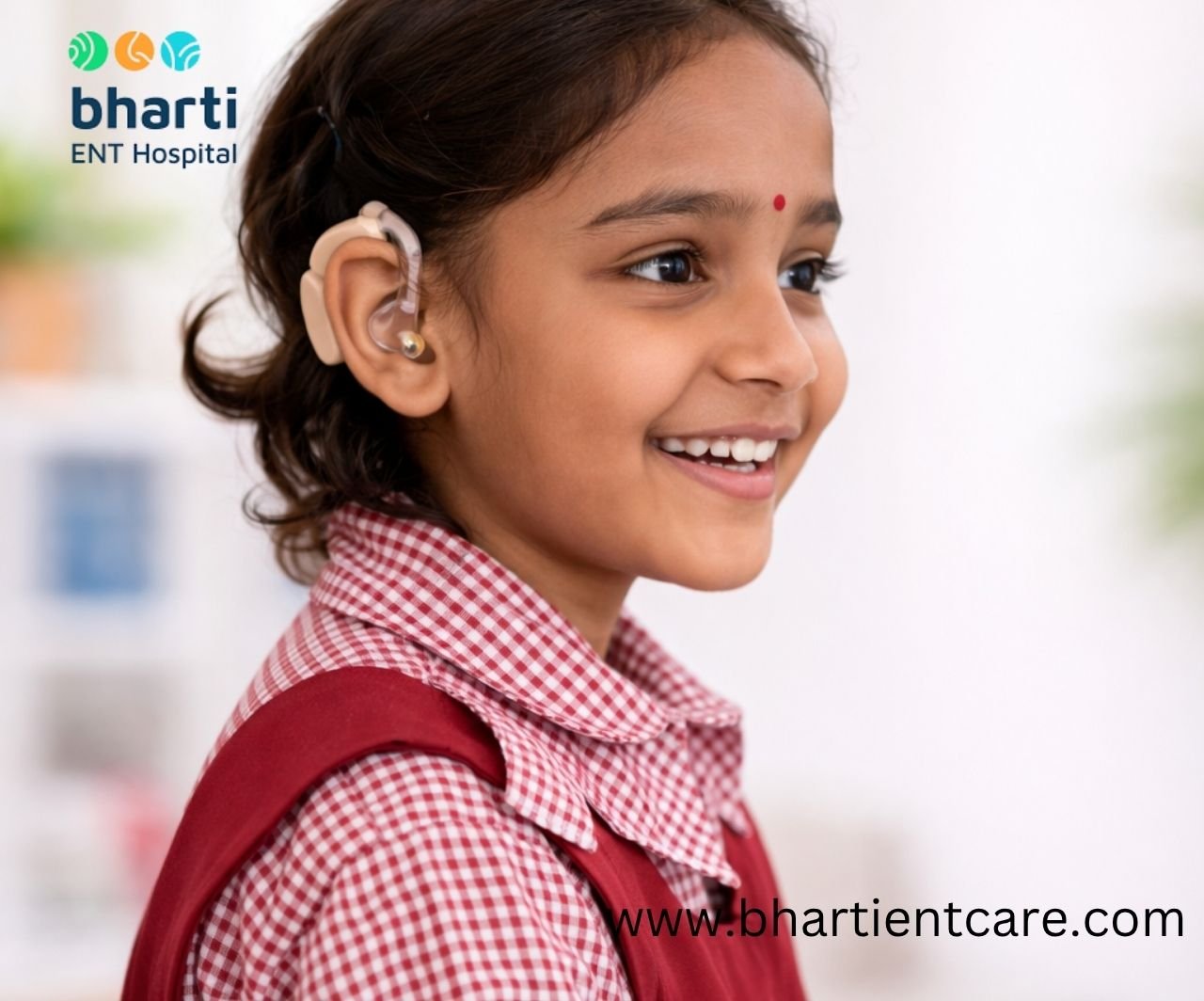
At the Bharti ENT Hospital, we ensure that the children with hearing problems get appropriate intervention as promptly as possible. Auditory process is very significant in speaking, language growth, and socialization of a child. Early diagnosed hearing loss can be corrected with excellent hearing aid fitting that can greatly enhance the communication and learning capabilities of the child.
When a child is diagnosed with hearing loss, parents are likely to be in a state of shock. Nevertheless, given proper guidance, technology, and clinical skills, children can live a normal and good life. It is not only about making the correct choice of a device, but also about the correct fitting of the device, as well as its periodic monitoring.
Understanding Hearing Loss in Children
The loss of hearing in children may be a congenital problem (one that occurs at birth), or it might be acquired later as a result of infections, trauma, or genetic causes. Early signs may include:
- Delayed speech development
- Inability to respond to sounds or voices
- Problem with following instructions
- Frequent need for repetition
Early diagnosis and correct hearing aid fitting can be used to bridge the divide between hearing impairment and normal hearing growth. This is due to the fact that hearing care for children needs special consideration since the ears of children are still developing, and they do not require the same listening requirements as adults.
An audiological setup with proper equipment would be critical in diagnosing and managing hearing loss in children. It guarantees proper testing and correct calibration of the devices.
The Importance of Proper Device Selection
Choosing the appropriate hearing aid is a very important step in the treatment process. Children need equipment that is:
- Comfortable and secure
- Durable for active lifestyles
- With powerful sound processing capabilities
- Adaptable as the child matures
The new hearing aids have the ability to pick up the sounds and reduce the background noise so that the children can better comprehend the speech in various settings, like classrooms or playgrounds.
Precise hearing aid fitting is very important for the success of treatment. Even the best device would not perform properly until it is calibrated properly. There are other considerations usually made in pediatric fittings such as ear mold customization and safety features.
The Step-by-Step Hearing Aid Fitting Process
Hearing aid fitting in children is a systematic process that is closely observed to achieve the optimal outcomes:
Comprehensive Hearing Assessment
The nature and degree of hearing loss is determined by audiological tests.
Device Selection and Customization
The hearing aid is selected and tailored according to the test results.
Ear Impression and Mold Creation
This is done by making a soft mold to make it fit snugly and comfortably in the ear of the child.
Programming and Calibration
The instrument is made programmable based on the hearing thresholds of the child.
Trial and Adjustment Phase
Children and parents are put through a trial phase with adjustments where needed.
Follow-Up and Monitoring
The frequent check-ups also help to make sure that the device is still effective as the child grows.
A highly qualified audiologist in Vadodara will ensure that all the steps are done with accuracy and sensitivity that make the process easy for the parents and children.
Adapting to Hearing Aids: What Parents Should Expect
Children can take time to adjust to the wearing of hearing aids. The first response may be either curiosity or discomfort. Parents are especially important in promoting regular use and helping the child to adjust.
Some of the considerations that are important are:
- Step-by-step increasing time of use
- Making sure that the device is worn when awake
- Watching out in case of discomfort or irritation
- Promoting listening and communication practices
Regular usage following proper hearing aid fitting helps the brain to adjust to new sounds which enhances speech articulation and understanding with time.
Parents must also have a free flow of communication with the audiologists in order to discuss any form of concern early.
Long-Term Care and Maintenance
Hearing aids need to be maintained regularly in order to operate. Parents should:
- Wipe the equipment and ear molds
- Check batteries or charging systems
- Keep the device dry and dust-free
- Schedule routine follow-ups
The structures of the ears of children evolve over time, which is why their periodic reevaluation and replacement is necessary. Constant checking will make sure that the hearing aid fitting is correct and efficient.
New hearing aid technology now incorporates Bluetooth connectivity, noise cancellation, and rechargeable batteries that have made hearing aids more useful and comfortable for children.
Why Early Intervention Makes a Difference
One of the most important aspects in the development of a child in terms of auditory and speech is early intervention. Children who receive proper hearing aid fitting become more likely to:
- Acquire age-appropriate speech and language skills
- Improve academically
- Grow trust in interpersonal relationships
- Meet developmental milestones
Timely diagnosis and treatment are very important as delays in treatment may cause long-term difficulties.
Supporting Your Child’s Hearing Journey
The future of a child can be changed when the correct hearing solution is provided at the appropriate time. Hearing aid fitting can be a potent instrument in hearing impairment with the help of professional assistance, technology, and personal care.
At Bharti ENT Hospital, the emphasis is on providing accurate diagnosis, personalized solutions, and ongoing assistance so that all children gain access to the pleasure of sound and communication.
Frequently Asked Questions (FAQs)
Is it possible to screen newborns for hearing issues at Bharti ENT Hospital?
Yes, the hearing screenings of newborns are carried out in the audiology department of the hospital.
What are the services offered in pediatric hearing aid fitting?
The services involve hearing test, device selection, ear mold design, programming, and subsequent support to help achieve the intended outcomes.
How frequently does the hearing aid of a child need to be checked or adjusted?
It is also advised to make regular follow-ups after every few months and change settings as the child develops and the hearing requirements evolve.
Is the fitting of hearing aids safe among infants and young children?
Yes, it is absolutely safe and non-invasive and devices are specially designed to be used by kids.
Does Bharti ENT Hospital provide full ENT services under one roof?
Yes, all the diagnosis, treatment, surgery, and rehabilitation are available in the same facility.