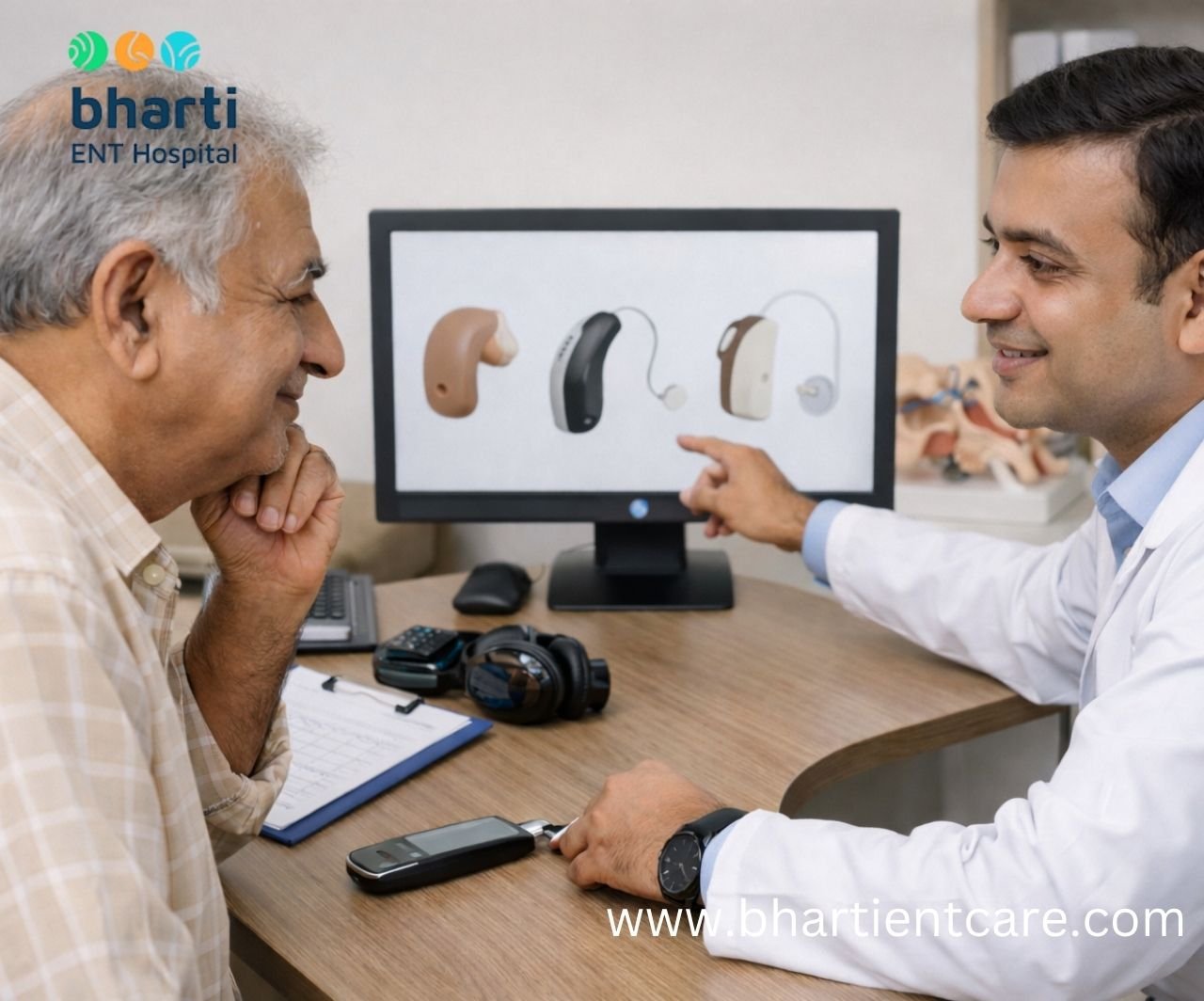
At Bharti ENT Hospital, the correct choice of hearing loss solution should be done through accurate diagnosis. Hearing impairment is diverse in type and severity so it is necessary to depend on a thorough audiological assessment before suggesting a hearing aid.
There is a common misconception that all hearing aids do the same thing, but the performance of any device is determined by the ability to correspond to the individual hearing profile. Audiology tests give the scientific basis required to make sure that each patient is offered a custom solution that enhances their level of clarity, comfort and overall performance of hearing.
Understanding the Purpose of Audiology Tests
Audiology tests are used to determine the quality of hearing of a person and their capacity to perceive various sounds and frequencies and speech patterns. These tests are not just tests of hearing loss; they are tests that aid in determining:
- The form of hearing impairment (conductive, sensorineural, or mixed)
- The severity (mild, moderate, severe, or profound)
- Speech recognition ability
- Response to various sound frequencies
This is important information when choosing a hearing aid because various devices serve a particular hearing need.
Audiological tests are done to make sure that the amplification given by the device is neither too low nor too high which causes discomfort and makes the speech clearer.
Types of Audiology Tests Used in Hearing Assessment
In order to obtain precise information, a complex hearing assessment is usually associated with a series of tests:
Pure Tone Audiometry
This test is used to determine the lowest audible sounds by an individual at different frequencies. It assists in the formation of an audiogram which acts as the guide to the appropriate hearing aid.
Speech Audiometry
This measures the ability of an individual to hear and comprehend speech. It plays a crucial role in deciding how to process and amplify the spoken words by the device.
Impedance Audiometry (Tympanometry)
The test determines the state of the middle ear and aids in detecting such problems as ear fluid accumulation or dysfunction of the ear drum.
Otoacoustic Emissions (OAE)
This is a test commonly applied to children and assesses inner ear (cochlear) functioning.
A combination of these tests will give a complete picture of the auditory system and give specialists the opportunity to suggest the best hearing solution.
How Test Results Influence Hearing Aid Selection
Results of audiology examinations are directly involved in the selection of a hearing aid type and characteristics. Key factors include:
Degree of Hearing Loss: Identifies the degree of amplification needed.
Frequency-Specific Loss: Assists in shaping the sound output depending on the pitch.
Speech Clarity Needs: Controls advanced functions such as noise removal.
Lifestyle Requirements: Determines the device style and level of technology.
As an illustration, a patient who has a hearing loss of high frequency might need a device that specifically improves speech sounds, whereas a severely impaired individual might need a more powerful one.
A skilled ENT specialist in Vadodara applies these to prescribe equipment that is in tandem with the clinical requirements as well as the daily life needs.
Customization and Programming of Hearing Devices
After selection of the right device, the next step is to program the device based on the audiogram of the patient. This guarantees that the hearing aid provides accurate amplification across various frequencies.
The customization process includes:
- Regulating the sound volumes to be comfortable
- Enhancing speech frequencies
- Reducing background noise
- Setting directional microphones
The current hearing aids have a digital technology that enables adjustment to different environments like quiet rooms, a crowded room or an outdoor environment.
Even the most advanced device would not produce the best results without proper programming, depending on the outcomes of audiology tests.
Trial, Adjustment, and Follow-Up Care
Selecting a hearing aid is not a one-time process. Once the patients are initially fitted, a trial phase is undertaken and optimization is made depending on the real-life experience.
During this phase:
- Patients rate sound quality and comfort
- Audiologists adjust settings accordingly
- Performance of the devices is observed over time
The visits should be followed up to make sure that the device still satisfies the needs of the patient. Further adjustments may be necessary as the hearing levels or lifestyle needs vary.
This continued attention guarantees long term satisfaction and better hearing results.
The Role of Technology in Modern Hearing Solutions
The development of hearing technology has changed the manner in which hearing loss is addressed. The current devices have the following functions:
- Bluetooth connection to facilitate easy device connectivity
- Rechargeable batteries for convenience
- Noise canceling to get clearer conversations
- Adaptive sound processing for dynamic environments
Audiology tests assist in identifying which of these features each person needs. Through matching technology and diagnostic information, patients are presented with a hearing aid that is more functional and comfortable.
This combination of technology and clinical knowledge will provide the user with a natural and successful hearing experience.
Importance of Early Testing and Timely Intervention
The postponement of hearing assessment may cause communication problems, antisocial behavior, and low quality of life. Early audiology tests can be used to determine:
- Early detection of hearing impairments
- Quicker treatment commencement
- Better adaptation to hearing devices
- Better speech and cognitive functioning
By selecting an appropriate hearing aid and at an appropriate time, one can make tremendous progress in the effectiveness and ease with which one can participate in conversations, work effectively, and enjoy their day to day activities.
It also avoids any additional complications and ensures that a hearing check-up is an indispensable element of comprehensive health care.
Precision-Driven Hearing Care for Better Living
It is necessary not only to select a device to get a hearing solution but also to diagnose, evaluate the situation and provide a patient with special treatment. Audiology tests are the keys to finding the right hearing aid that suits the patient and promises successful and comfortable hearing restoration.
At Bharti ENT Hospital, the emphasis is made on the integration of modern diagnostics and tailor-made treatment strategies and restoring the confidence of patients and re-uniting with the sounds they value the most.
Frequently Asked Questions (FAQs)
What are the services covered in hearing aid selection and installation at Bharti ENT Hospital?
The services such as hearing assessment, device fitting, programming and long-term maintenance to achieve the best performance are provided.
What is the role of audiology tests in selecting the appropriate hearing aid?
They determine the type and severity of hearing loss, which enables the correct selection and programming of the devices.
Which hearing aid brands are available for patients?
Various digitally advanced hearing aids of major brands are provided depending on personal needs.
Are hearing aids suitable for all types of hearing loss?
Most of them work well, especially with sensorineural hearing loss, and this varies with severity.
What kind of support is provided after fitting a hearing aid at Bharti ENT Hospital?
Patients are provided with frequent follow-ups, adjustments, maintenance instructions, and performance measurements.