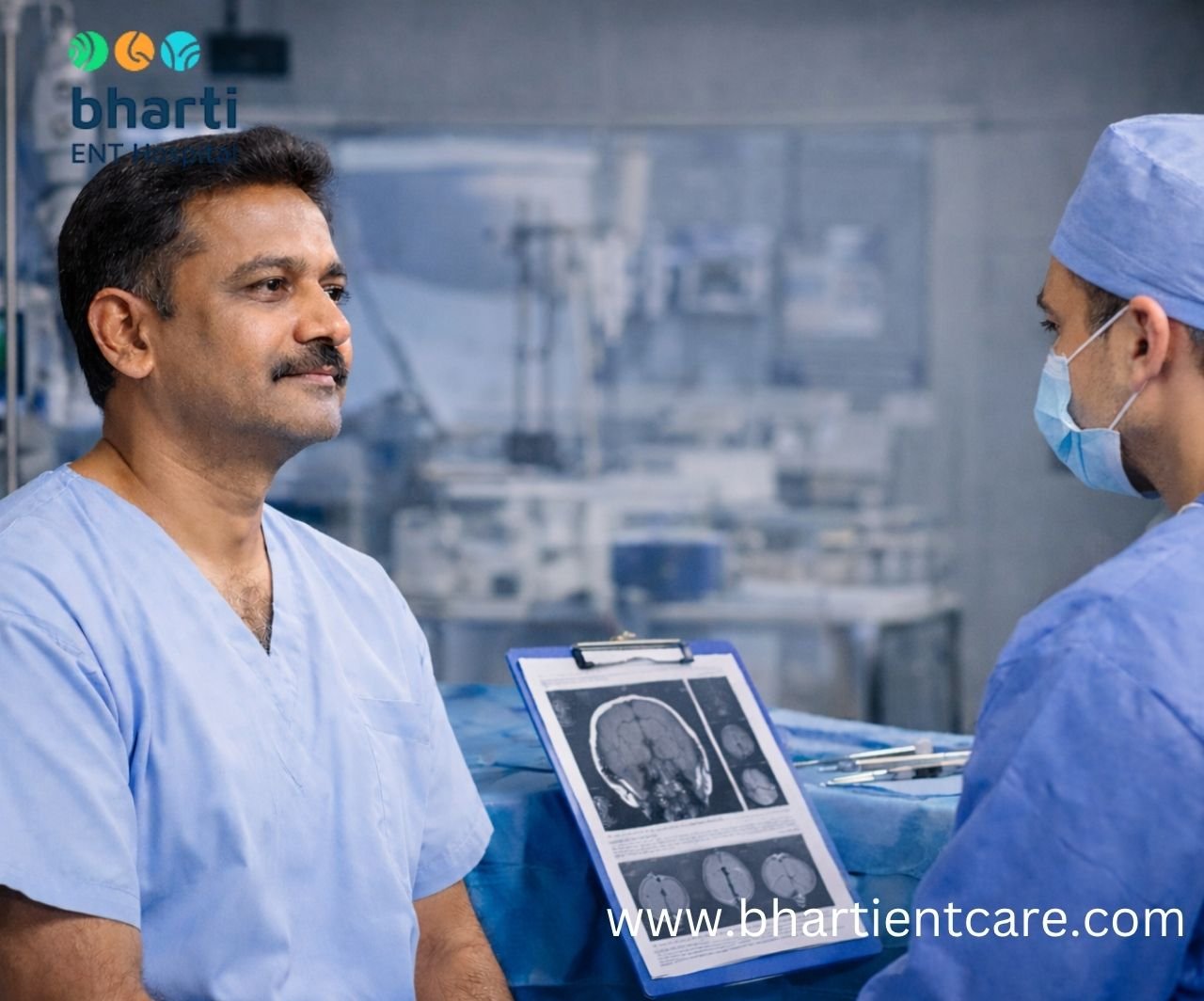
At Bharti ENT Hospital, patients with complicated surgeries are provided with a systematic orientation and improved services as a guarantee of safety and confidence during the treatment process. Skullbase surgery is one such highly specialized surgery that is done to cure the conditions that affect the bottom of the skull, such as tumors, infections, and structural defects.
This kind of surgery is very specific to plan, needs advanced technology and a multi-disciplinary approach. The patient is also usually concerned with preparation, risks, recovery, and outcomes. Having an idea of what to expect will reduce the anxiety and guarantee better cooperation during the treatment.
Understanding Skull Base Conditions and Treatment Needs
The skull base is a sensitive region that forms a barrier between the brain and the facial features and contains important blood vessels and nerves. Conditions affecting this area might include:
- Benign or malignant tumors
- Pituitary gland abnormalities
- Leaks in cerebrospinal fluid (CSF)
- Chronic infections
- Vascular or nerve disorder
These diseases are usually subjected to surgical procedures in cases where the drugs or non-invasive procedures are not adequate. The purpose of skullbase surgery is to cure or treat damaged tissue without damaging the key structures.
Early diagnosis and early treatment have a great impact on the outcomes and minimization of complications.
Pre-Surgical Evaluation and Preparation
The preparation stage is an important stage that contributes to the success and safety of the process. Patients usually go through an elaborate evaluation procedure before they can undergo skullbase surgery.
Key Steps in Pre-Surgical Preparation:
Medical Assessment: Full health check-up, including blood tests and physical examination
Imaging Studies: CT and MRI to determine the precise location and the size of the condition
Specialist Consultations: Co-ordination with ENT surgeons, neurosurgeons and other specialists
Medication Review: Modifications to existing drugs, particularly blood thinners
Preoperative Instructions: Preoperative instructions on fasting, hygiene and lifestyle changes
Patients receiving care at the best ENT hospital in Vadodara enjoy the benefits of well-planned care and individualized care plans aimed to reduce risks and maximize the results of surgery.
Surgical Approaches and Techniques
The current skull base surgery is conducted with some of the most sophisticated methods that emphasize accuracy and least invasiveness.
Common Surgical Approaches Include:
Endoscopic Endonasal Approach: Exposure of the skull base via the nasal passages without external incisions
Open Surgical Approach: Employed in the case of complex or large lesions that need to be accessed directly
Combined Techniques: Endoscopic and traditional techniques are combined to achieve maximum outcomes
Endoscopic approach has largely been chosen because of:
- Less trauma to the surrounding tissues
- Shorter hospital stay
- Faster recovery
- Minimal visible scarring
The technique applied is based on the condition of the patient, the location of the lesion and the general health condition of the patient.
What Happens During the Procedure
The surgical procedure is well scheduled and carried out with maximum safety.
Step-by-Step Overview:
- Anesthesia Administration: The patient is put under a general anesthesia
- Surgical Access: The surgeon gets to the skull base through the approach taken
- Removal or Repair: Tumors or abnormal tissues are excised, or structural repairing is done
- Reconstruction: The damaged area is rebuilt in case it is required to regain functionality and stability
- Monitoring: Vital functions are continuously monitored during the procedure
The length of surgery is determined by the level of complexity yet is done with accuracy to avoid damaging vital nerves and blood vessels.
Recovery and Post-Operative Care
The management of skullbase surgery includes close observation and progressive resumption of normal activity. The patients can be observed first in an intensive care or recovery unit.
The most vital points of recovery include:
- Medication and pain management
- Checking complications like infection or fluid leakage
- Slowly increase diet and exercise
- Frequent follow-up visits and imaging
During the recovery, the patient is advised against heavy lifting, straining or pressurizing the head.
Through appropriate care and following medical instructions, a majority of patients record positive growth and success.
Emotional Readiness and Patient Support
The preparation of a complicated surgery like a skullbase surgery is not just physical, but also emotional. Patients and families can be worried about the recovery and surgery procedure.
Support systems are very crucial in:
- Giving comfort and emotional security
- Promoting compliance with treatment
- Helping in after-surgery nursing
Effective communication with health care practitioners will assist patients to know the procedure, the anticipated results, and the recovery period.
Long-Term Outcomes and Follow-Up Care
Repeat follow up and monitoring are the key to long term success. Postoperative treatment might involve:
- Regular imaging to evaluate healing
- Rehabilitation in case of nerve functioning
- Continued medical care where necessary
Surgical development has been extremely successful to enhance quality and life of patients through better results.
Initial treatment, specialized treatment and follow-up care lead to ultimate success.
Preparing for a Safe and Successful Surgical Journey
Complex procedures require proper preparation, professional surgical treatment and extensive post-operative management to achieve success. When done with precision and planning, skullbase surgery can be used to provide an effective treatment of difficult conditions.
Patients in Bharti ENT Care Hospital can enjoy the benefits of technology, multidisciplinary skills, and individualized care, which makes them safe, confident, and experience better life quality during their treatment process.
Frequently Asked Questions (FAQs)
What are the conditions treated in skullbase surgery at Bharti ENT Hospital?
It is applied in the treatment of tumours, infections, CSF leakage as well as structural abnormalities at the base of the skull.
What is the recovery time of skullbase surgery?
The recovery is gradual and usually takes several weeks with gradual return to normalcy.
Does skullbase surgery involve any risk?
There is a risk as with any significant surgery but this is reduced through the use of advanced methods and professional attention.
What is offered by the hospital following the procedure?
Patients are provided with follow-up and monitoring, and rehabilitation assistance.
Is Bharti ENT Hospital equipped with modern technology?
Yes, it has high-resolution endoscopes, microscopes, nerve monitor systems, and a hi-tech OT set up.