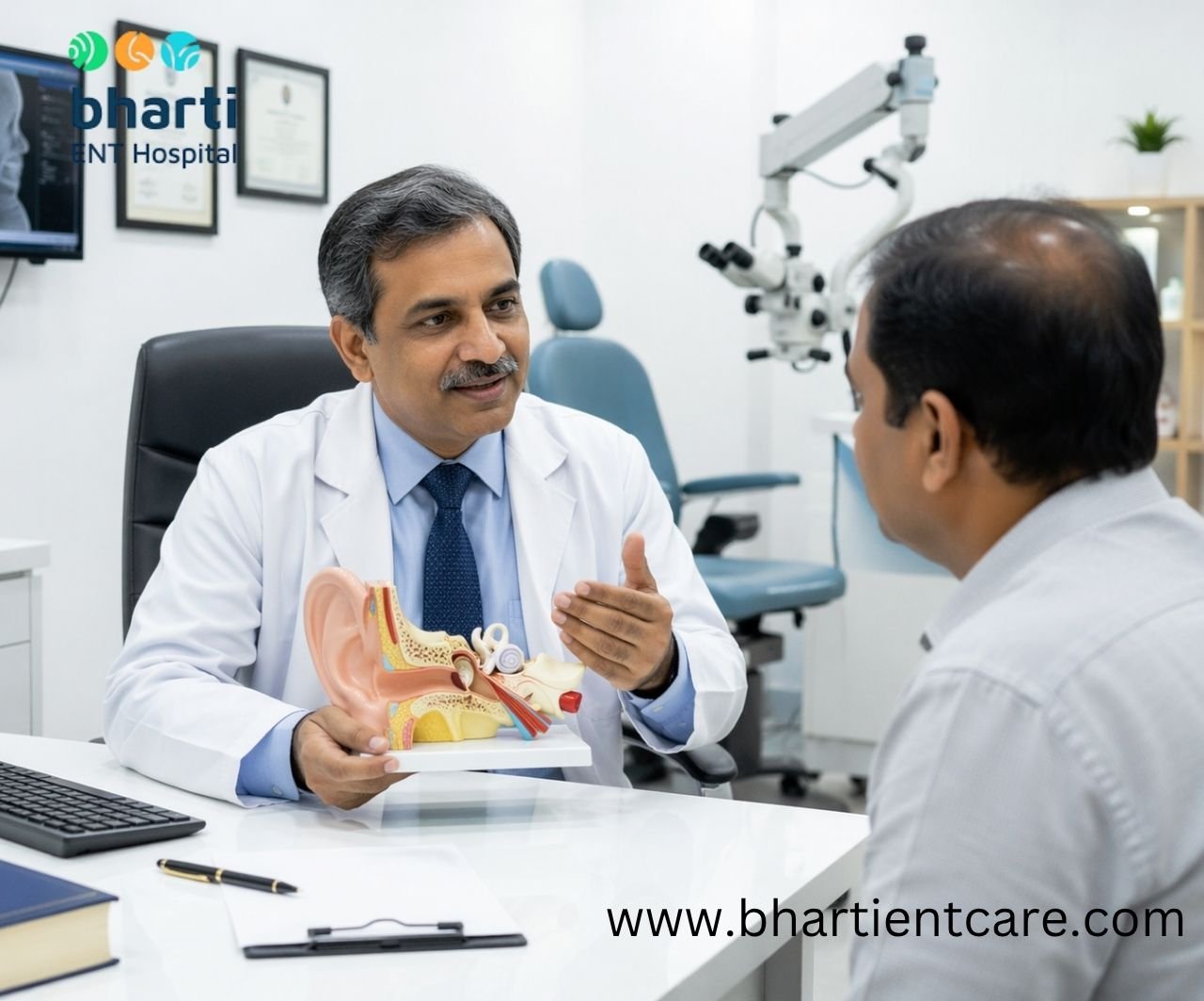
At Bharti ENT Hospital, growing cases are reporting with hearing challenges not due to age or disease, but as a result of excessive exposure to high intensity sound. Noise-Induced Hearing Loss (NIHL) is an avoidable, but common and increasingly prevalent condition affecting people of all ages, even young adults. It is a condition that is caused by the breakdown of delicate structures in the inner ear due to high noise levels resulting in gradual or sudden hearing loss.
The human ear is adapted to accommodate various levels of sound intensity; however, when the ear is repeatedly exposed to sounds that are above 85 decibels, this may cause permanent damage. Traffic noises, industrial settings, loud music and even sustained use of headphones are common sources. The World Health Organization (WHO) reveals that unsafe listening practices expose more than 1 billion young people to the risk of hearing loss.
The most alarming aspect of NIHL is that it is progressive in nature. Not everyone is aware of the initial symptoms, including having trouble hearing conversations in noisy places or experiencing ringing in the ears (tinnitus). Symptoms may take some time before they become noticeable and in the meantime, much damage must have happen.
Common Causes of Noise-Induced Hearing Loss
NIHL may be caused by not only sudden exposure to very loud noises but also long time exposure to moderately high noises. By finding these causes, people can take proactive measures to preserve their hearing.
- One of the primary causes is occupational exposure. Workers in the construction, manufacturing or aviation industries are often exposed to noise levels that are high. Long term exposure may cause permanent hearing loss without the use of ear protection.
- Leisure activities are also a big factor. Hearing can be impaired over time when listening to loud music through headphones, when attending concerts, or when listening to loud machinery in the home. Especially personal listening devices have been a significant issue since they are used extensively and are set at a high volume.
- The inner ear can be damaged immediately in case of sudden loud noises, e.g., explosions or firecrackers. Such exposure can often cause sudden hearing loss which could be partial or total depending on the severity.
- Urban noise pollution is another aspect that has not been considered. Hearing impairment may be cumulative due to the constant exposure to traffic, construction and crowded areas.
Availability of sophisticated diagnostic instruments and a fully-fitted audiological setup is very important in early diagnosis and treatment. Understanding the causes and prevention strategies may greatly minimize risk and save long-term hearing abilities. The minimization of risk entails reducing exposure and embracing safe listening practices.
Symptoms and Early Warning Signs
To intervene in time, it is important to identify the initial symptoms of Noise-Induced Hearing Loss (NIHL). The symptoms tend to build up over time and are therefore easily missed during the early stages.
- Difficulty in understanding speech particularly in a noisy environment is one of the first signs. People might be constantly requesting others to repeat themselves. This is because the high-frequency sounds which are very important in making speech clear are often impacted first.
- Another common symptom is known as tinnitus or the persistent sound of ringing or buzzing in the ears. It can be transient or persistent in nature. Although it can appear harmless at first, it is a symptom that can be a sign of damage inflicted on the auditory system.
- Hyperacusis, which is sensitivity to sound, may also occur. Common sounds might become too loud or too irritating to everyday experience, which influences everyday activity.
- The indirect symptoms include fatigue and an inability to focus on a conversation because of the extra effort needed to hear and understand the conversation. These signs can impact both personal and professional life.
Professional assessment at a young age is paramount. When a person visits an experienced audiologist in Vadodara, the diagnosis and prompt treatment will be provided to avoid further impairment.
Diagnosis and Available Treatment Options
NIHL is a condition that is diagnosed by evaluating both hearing functionality and medical history. This starts with an in-depth consultation to see what is wrong with the patient, their life and whether they have been exposed to noise.
The hearing tests include pure-tone audiometry, which measures the capacity to hear various sounds of different frequencies and intensities. These tests aid in establishing the extent and nature of hearing impairment. The sophisticated diagnostic instruments can give accurate conclusions, which can be used to develop individual treatment strategies.
Although NIHL is not reversible in most cases, different management options have the potential to substantially enhance hearing and quality of life. Hearing aids constitute one of the best solutions. Modern devices are meant to selectively amplify sound, making it clearer and lessening the background noise.
Hearing aid fitting process entails the process of choosing the right device in accordance with the hearing profile, lifestyle, and preferences of the patient. Fitting should be performed properly so that it provides optimal performance and comfort.
Auditory training and rehabilitation programs can also be prescribed to assist people in adjusting to hearing aids and enhance communication capabilities.
Prevention Strategies for Long-Term Hearing Health
It is feasible and efficient to prevent NIHL in case proper measures are undertaken. Consciousness and consistency are vital in safeguarding hearing in daily events.
- One of the most important strategies is controlling exposure to loud sounds. Noise-reducing earplugs, or noise-canceling headphones, can be put on with ear protection to help significantly reduce the risk present in noisy settings. It is also vital to maintain safe listening levels particularly when using personal audio devices.
- The “60/60 rule” is a simple guideline, listening at no more than 60% volume for no longer than 60 minutes at a time. Regular breaks enable the ears to rest and minimize cumulative damage.
- Establishing less noisy homes and workplaces also helps with hearing. Simple modifications, like lessening the level of noise in the background and keeping distance between the loud sources, can be of great importance.
- Regular hearing tests are necessary especially for those who are at greater risk. Early detection can be used to intervene in time and avoid additional damage.
Technological innovations have made it possible to enhance speech clarity with digital hearing aids. Awareness and education are a key part of prevention. Being aware of the dangers and developing preventive measures will guarantee hearing preservation and general wellness in the long-term.
Preserving Your Hearing Health Today
The focus at Bharti ENT Hospital is on prompt diagnosis, state-of-the-art diagnostics, and customized treatment of individuals with hearing problems caused by noise. Noise-Induced Hearing Loss is mostly avoidable, and when people know the details and precautions, they can preserve their hearing. With the help of professional assistance and the latest technology, patients will be able to achieve the best hearing and better their quality of life.
Frequently Asked Questions (FAQs)
Which services are covered in hearing aid solutions at Bharti ENT Hospital?
They include hearing assessment, equipment choice, installation, and aftercare.
Which kinds of hearing aids are available?
There are digital, behind-the-ear, in-the-ear and advanced programmable devices available.
How long does it take to adjust to hearing aids?
The adaptation for most patients takes place after a few weeks of consistent use.
Should follow-up visits be done following fitting?
Yes, monitoring and adjustments make sure that performance is optimal.