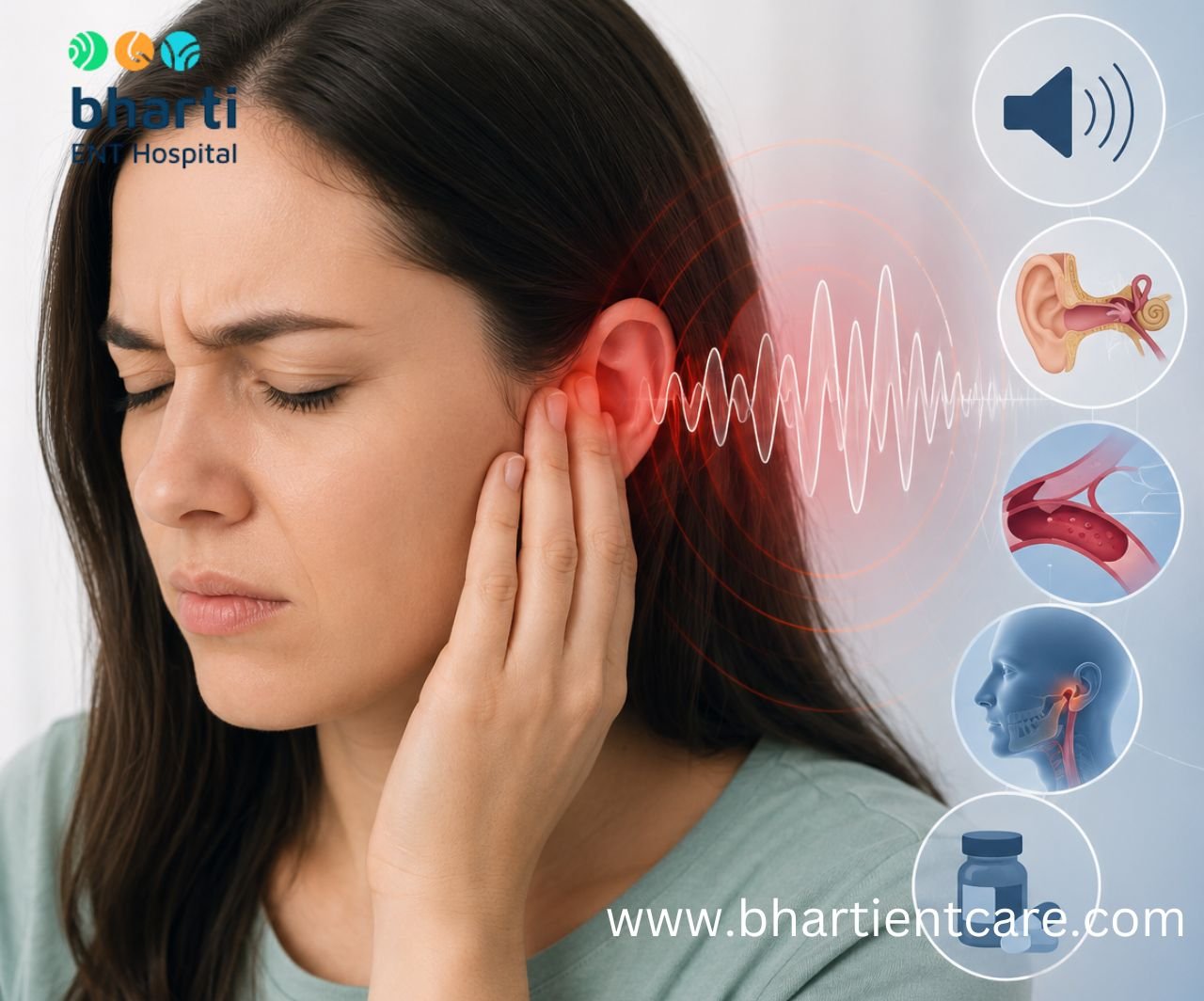
If you have ever heard a buzzing or a hissing sound, or even a ringing sound that no one else could hear, you’re not alone – you are suffering from tinnitus, one of the most common complaints by patients who visit their Ear, Nose and Throat (ENT) specialists. It can happen to those of any age, whether they are a student who is being exposed to loud music or older adults who have hearing changes that are due to the aging process.
This guide explains what tinnitus really is, why it happens, the various types of tinnitus, and – most importantly – when it’s time to put up with it and get an appointment with an ENT specialist in Vadodara instead.
What Is Tinnitus?
Tinnitus is the perception of sound – such as ringing, buzzing, hissing, or clicking – in one or both ears without any external source producing that sound. It is a symptom, not a disease itself.
Tinnitus originates in how the brain and auditory system process sound signals. It can be constant or intermittent, mild or severe enough to interfere with sleep, concentration, and emotional well-being. Roughly 1 in 10 adults experiences some form of tinnitus at some point in their life, though most cases are mild and manageable.
What Causes Tinnitus?
Tinnitus is most commonly caused by exposure to loud noise, age-related hearing loss, earwax buildup, or underlying conditions affecting the ear, jaw, or blood vessels. In many cases, it’s linked to damage in the tiny hair cells of the inner ear.
Common causes include:
- Noise-induced hearing damage – from concerts, headphones, industrial machinery, or firecrackers
- Age-related hearing loss (presbycusis) – gradual wear on inner ear structures
- Earwax blockage – a simple, reversible cause often mistaken for something serious
- Ear infections or fluid buildup
- Meniere’s disease – an inner ear disorder affecting balance and hearing
- Eustachian tube dysfunction – often after colds, flights, or sinus congestion
- TMJ (jaw joint) disorders – jaw muscle tension affecting nearby ear nerves
- Certain medications – high doses of aspirin, some antibiotics, or diuretics
- Blood vessel or blood pressure issues – associated with pulsatile tinnitus
- Head or neck injury
- High stress and poor sleep – can worsen perceived tinnitus intensity, even if not the root cause
What Are the Different Types of Tinnitus?
Tinnitus is broadly classified into two types – subjective tinnitus, heard only by the patient, and objective tinnitus, which can sometimes be heard by an examiner too. A specific subtype called pulsatile tinnitus follows the rhythm of your heartbeat.
| Type | Description | Who Can Hear It |
| Subjective Tinnitus | The most common type; caused by issues in the ear or auditory pathways | Only the patient |
| Objective Tinnitus | Rare; caused by internal sounds like blood flow or muscle spasms | Sometimes audible to a doctor during examination |
| Pulsatile Tinnitus | Rhythmic sound matching your heartbeat, often related to blood vessels | Only the patient (usually) |
| Neurological Tinnitus | Linked to underlying nerve or neurological conditions | Only the patient |
Is Tinnitus a Sign of Something Serious?
Most tinnitus cases are not dangerous and are linked to manageable causes like earwax or noise exposure. However, sudden, one-sided, pulsatile, or worsening tinnitus – especially with hearing loss or dizziness – can signal an underlying condition that needs prompt evaluation.
Tinnitus itself rarely indicates a life-threatening problem, but it can be an early warning sign the ear is trying to send. Ignoring persistent symptoms delays diagnosis of treatable conditions like Meniere’s disease, vascular abnormalities, or progressive hearing loss.
When Should You See an ENT for Tinnitus?
You should see an ENT specialist if tinnitus lasts more than a week, occurs in only one ear, is accompanied by hearing loss or dizziness, pulses with your heartbeat, or significantly affects your sleep or concentration.
Book a consultation promptly if you notice:
- Tinnitus lasting longer than a week without improvement
- Ringing in only one ear
- Sudden hearing loss alongside the ringing
- Dizziness, vertigo, or balance problems
- Pulsatile tinnitus (sound that beats with your pulse)
- Tinnitus following a head or ear injury
- Symptoms that are worsening or disrupting daily life
If you’re based in Vadodara, an ENT clinic in Nizampura and Gotri can typically evaluate and diagnose the cause within a single visit using ear examination and hearing tests – there’s rarely a need to “wait it out” once symptoms persist beyond a few days.
How Is Tinnitus Diagnosed?
ENT specialists diagnose tinnitus through a physical ear examination, a detailed hearing test (audiometry), and sometimes imaging or blood tests to rule out underlying causes like blood vessel issues or nerve conditions.
Typical diagnostic steps include:
- Ear examination – checking for wax buildup, infection, or structural issues
- Audiometry (hearing test) – measures hearing sensitivity across frequencies
- Tympanometry – checks middle ear function
- Imaging (MRI/CT) – used selectively for one-sided, pulsatile, or unexplained tinnitus
- Blood pressure and vascular checks – for suspected pulsatile tinnitus
Can Tinnitus Be Treated or Cured?
Tinnitus caused by a specific issue – like earwax, infection, or medication – can often be resolved by treating that root cause. Chronic tinnitus without a single identifiable cause is usually managed rather than “cured,” using sound therapy, hearing aids, and lifestyle adjustments.
Common management approaches:
- Treating the underlying cause (earwax removal, infection treatment, medication changes)
- Hearing aids – often reduce tinnitus perception if hearing loss is present
- Sound therapy / white noise machines – mask the internal sound
- Tinnitus retraining therapy (TRT) – helps the brain “tune out” the sound over time
- Stress management and sleep hygiene – reduces symptom intensity
- Avoiding further noise exposure – protects remaining hearing
An ENT specialist can determine which category your tinnitus falls into and build a treatment plan accordingly – this is why self-diagnosing from the internet isn’t a substitute for an in-person hearing evaluation.
Frequently Asked Questions (FAQ)
Can tinnitus go away on its own?
Yes, mild tinnitus from temporary causes like loud noise exposure or a cold often resolves within days. Persistent tinnitus lasting over a week should be evaluated by an ENT.
Is tinnitus a symptom of hearing loss?
Tinnitus is frequently linked to hearing loss, especially age-related or noise-induced hearing loss, though it can also occur with normal hearing.
What does pulsatile tinnitus mean?
Pulsatile tinnitus is ringing or whooshing that beats in rhythm with your heartbeat, often related to blood flow near the ear, and generally warrants prompt ENT evaluation.
Which doctor should I consult for ear ringing?
An ENT (Ear, Nose, and Throat) specialist is the right doctor for tinnitus evaluation; they may involve an audiologist for detailed hearing tests.
Can stress cause tinnitus?
Stress doesn’t typically cause tinnitus on its own, but it can make existing tinnitus feel louder or more noticeable.