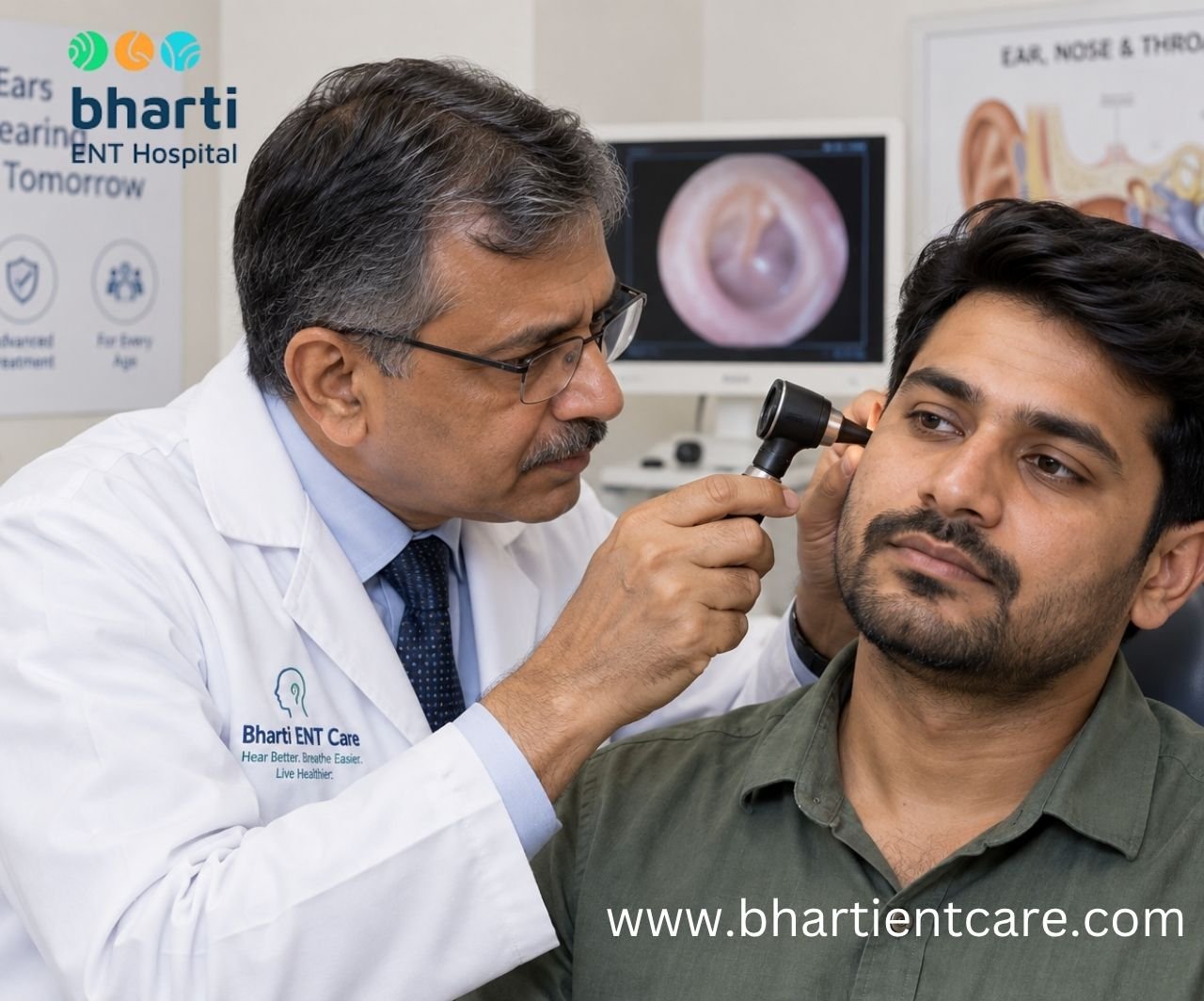
Earwax is a natural substance that protects the ears from dust, dirt and other foreign particles. However, when too much wax accumulates or becomes trapped inside the ear canal, it can cause discomfort, a blocked sensation and temporary hearing difficulties. Although earwax often clears naturally, some people may need professional earwax removal to relieve symptoms and prevent complications.
Understanding when ear cleaning is necessary, which removal methods are available and when to consult an ENT specialist can help people make informed decisions about their ear health.
This article explains the causes of earwax buildup, the signs of impacted earwax, the benefits and limitations of different earwax removal methods, and when professional assessment may be appropriate.
What Is Earwax and Why Do We Have It?
Earwax, medically known as cerumen, is a natural substance produced by glands in the outer ear canal. It consists of secretions, skin cells and other material that gradually collects in the ear.
Although some people consider earwax dirty, it serves several useful purposes:
- Protection: It helps trap dust, dirt and other small particles before they travel deeper into the ear canal.
- Moisture: It helps maintain the condition of the skin lining the ear canal.
- Natural defence: Its properties help support the ear canal’s protective environment.
The ear canal normally moves old wax and skin cells towards the opening, where they can leave naturally. Jaw movements during talking and chewing may assist this process.
Earwax does not usually need to be removed simply because it is present. In fact, removing too much wax can interfere with the ear canal’s natural protective functions. Professional removal is generally considered when wax causes symptoms, obstructs examination or creates another clinical concern.
What Causes Earwax Buildup?
Earwax buildup occurs when wax accumulates faster than it can naturally move out of the ear canal. This does not necessarily mean someone has poor hygiene.
Several factors can contribute to excessive earwax or blockage.
Natural differences in earwax production
Some people naturally produce more earwax than others. The consistency of wax also varies. It may be soft and moist or relatively dry and firm, which can influence how easily it moves out of the canal.
Narrow or unusually shaped ear canals
A naturally narrow, curved or irregular ear canal may make it harder for wax to move out. In these situations, even an ordinary amount of wax may become trapped.
Using cotton buds or inserting objects into the ear
Cotton buds, hairpins and similar objects can push wax further into the canal rather than removing it. Repeated attempts at cleaning can also irritate or injure the delicate skin inside the ear.
Hearing aids and earplugs
Devices such as hearing aids, earplugs and other in-ear products may interfere with the natural movement of earwax in some people. Regular ear examinations can help hearing aid users identify excessive wax buildup, particularly when they notice changes in hearing or reduced device performance.
Age-related changes
Earwax may become drier or harder with age. Changes in the skin and the ear canal’s natural cleaning process can also make accumulation more likely.
These factors can contribute to blockage, but they do not mean that everyone who uses hearing aids, cotton buds or earplugs will develop impacted earwax.
What Is Impacted Earwax?
Impacted earwax occurs when wax accumulates in the ear canal and causes symptoms or prevents the ear from being examined adequately.
It is different from ordinary earwax buildup. Wax may be visible in the ear without causing any problems, while impacted wax can interfere with hearing, cause discomfort or prevent a clinician from examining the eardrum.
Common symptoms of impacted earwax
Symptoms may include:
- A blocked or full sensation in the ear.
- Muffled or reduced hearing.
- Earache or discomfort.
- Itching inside the ear.
- Ringing or buzzing sounds, known as tinnitus.
- Dizziness in some cases.
These symptoms are not exclusive to earwax blockage. Ear infections, eardrum problems and other ear conditions can produce similar complaints.
For this reason, it is important not to assume that earwax is responsible for every blocked ear or hearing problem. An examination can help establish whether wax is present and whether it is actually causing the symptoms.
When Is Professional Ear Cleaning Necessary?
Professional ear cleaning may be appropriate when earwax causes symptoms, prevents an examination or cannot be safely managed at home.
An ENT specialist or another appropriately trained healthcare professional can examine the ear canal and determine whether removal is necessary.
You experience persistent ear blockage
If your ear feels blocked and the sensation does not improve, an examination can help determine whether impacted wax is responsible. Avoid repeatedly inserting objects into the ear to try to clear it.
Your hearing becomes muffled
Earwax can interfere with sound travelling through the ear canal. If wax is confirmed as the cause, removing it may improve hearing. However, hearing loss can have other causes, so persistent hearing difficulties require appropriate assessment.
You experience discomfort or itching
Impacted wax may cause local discomfort or itching. However, significant pain, discharge or swelling may indicate another condition, such as an infection, that needs separate assessment.
Earwax prevents a necessary examination
Sometimes wax needs to be removed so that a clinician can examine the eardrum or investigate symptoms properly. This may be important when someone has ear pain, suspected infection or another ear-related concern.
You use hearing aids and notice changes
Wax can affect hearing aid performance or contribute to a blocked sensation. If your device suddenly seems less effective, an ear examination can help identify whether wax is contributing to the problem.
You have repeated problems with wax accumulation
People who repeatedly develop impacted earwax may benefit from an individualised management plan. The appropriate frequency of examination or removal depends on their symptoms, ear anatomy and medical history.
Professional cleaning is not routinely necessary for everyone. If earwax is not causing symptoms and does not interfere with examination, leaving it alone is generally appropriate.
What Happens During Professional Earwax Removal?
The earwax removal procedure usually begins with an examination rather than immediate cleaning.
The exact process depends on the amount and consistency of wax, the patient’s symptoms, their medical history and the condition of the ear canal and eardrum.
Step 1: Medical history and symptom assessment
The clinician may ask about:
- Ear pain, blockage, itching or hearing changes.
- Previous ear infections or eardrum perforations.
- A history of ear surgery or ear tubes.
- Hearing aid use.
- Diabetes, immune system problems or medicines that may affect bleeding.
These details help the clinician select an appropriate method and identify situations in which certain techniques should be avoided.
Step 2: Examination of the ear
The clinician examines the ear canal using an otoscope or another suitable visualisation instrument.
This helps establish whether wax is present, how much it obstructs the canal and whether there are signs of inflammation, injury or another condition.
Step 3: Selection of a removal method
Depending on the findings, the clinician may recommend:
- Earwax-softening drops.
- Irrigation with a suitable solution.
- Manual removal using specialised instruments.
- Suction removal under direct visualisation.
More than one method may sometimes be used.
Step 4: Removal and reassessment
After removal, the clinician may examine the canal again to assess whether the blockage has cleared and whether the eardrum can be seen.
If symptoms continue despite successful removal, the clinician should consider whether another condition is responsible.
Different Earwax Removal Methods: Benefits and Limitations
There is no single method that is suitable for every patient. The choice depends on the wax itself, the patient’s medical history and the clinician’s assessment.
| Removal method | How it works | Potential benefits | Limitations and considerations |
| Earwax-softening drops | Drops help soften or loosen accumulated wax. | May help wax clear naturally or make subsequent removal easier. | May not clear a significant blockage on their own. Some products are unsuitable for certain ear conditions. |
| Ear irrigation | A suitable fluid is used to flush wax out of the ear canal. | Can be effective for selected patients with impacted wax. | Not suitable for everyone. It may cause discomfort, dizziness, canal injury or infection, and should be avoided in certain patients. |
| Manual removal | A trained clinician uses appropriate instruments, such as a curette or forceps, under direct visualisation. | Allows targeted removal and avoids introducing water into the ear canal. | Requires appropriate training and equipment. Canal injury or eardrum damage is possible if performed incorrectly. |
| Microsuction | A clinician uses a suction device to remove wax while viewing the ear canal. | Allows controlled removal under visual guidance and avoids irrigation fluid. | May be uncomfortable or noisy for some patients. Suitability depends on the clinical findings and available equipment. |
These approaches are recognised options for managing impacted earwax. Their suitability and potential risks should be assessed for each patient rather than assuming one technique is always superior.
Which method is safest?
The safest method depends on the individual’s ear health and medical history.
For example, irrigation may be unsuitable for someone with a perforated eardrum, certain previous ear surgeries or an increased risk of ear canal complications. Manual removal or suction may be considered instead, depending on the examination.
People with diabetes, a weakened immune system, a history of ear surgery, ear tubes or other relevant medical factors should tell their clinician before treatment.
The aim is not simply to remove the wax, but to do so using an approach appropriate for the patient’s circumstances.
Is It Safe to Remove Earwax at Home?
Some cases of earwax buildup can be managed without an in-person procedure. However, home treatment is not suitable for everyone.
For people without relevant ear conditions or warning symptoms, an appropriate earwax-softening product may help loosen wax. The product instructions should be followed, and a pharmacist or healthcare professional can advise whether it is suitable.
What should you avoid?
Cotton buds and other objects: Inserting objects into the ear canal can push wax deeper, irritate the skin or cause injury.
Ear candling: Ear candling has not been shown to be an effective treatment for impacted earwax and can cause harm. It should not be used to clean the ears.
Unsupervised irrigation: Flushing the ear at home may be unsuitable if the eardrum is perforated, there is a history of ear surgery or tubes, or another risk factor is present.
Unverified home remedies: Avoid putting oils, liquids or other substances into the ear without checking whether they are appropriate, particularly if you have pain, discharge, a known eardrum problem or previous ear surgery.
If home treatment causes pain, dizziness, irritation or a change in hearing, stop and seek medical advice.
What Are the Risks of Improper Ear Cleaning?
The ear canal has delicate skin, and the eardrum is a sensitive structure. Attempting to remove wax without suitable training or equipment can cause complications.
Possible problems include:
- Ear canal injury: Objects inserted into the ear may scratch or damage the skin.
- Wax impaction: Pushing wax deeper can make the blockage more difficult to remove.
- Pain and irritation: Repeated cleaning can cause discomfort and inflammation.
- Infection: Injury or inappropriate irrigation may increase the risk of infection.
- Eardrum damage: Incorrect use of instruments or excessive irrigation pressure can injure the eardrum.
- Dizziness: Certain procedures or unsuitable fluid temperatures can trigger dizziness.
Professional treatment also carries some risk. This is why clinicians assess the ear before selecting a method and check the result afterwards.
When Should You Seek Medical Attention?
Arrange an assessment with an ENT specialist or another appropriate healthcare professional if you have persistent ear blockage, suspected impacted wax, recurring wax-related symptoms or difficulty hearing.
However, some symptoms should not simply be attributed to earwax.
Seek urgent medical assessment if you experience:
- Sudden hearing loss, particularly if it develops over hours or a few days.
- Severe or rapidly worsening ear pain.
- Ear discharge accompanied by pain, fever or other concerning symptoms.
- Significant dizziness or new neurological symptoms.
- Ear symptoms following an injury.
Sudden hearing loss needs prompt assessment because causes other than earwax may require time-sensitive treatment. Do not delay seeking care while attempting repeated home cleaning.
How Can You Reduce the Risk of Earwax Blockage?
Although earwax cannot always be prevented from accumulating, some habits may help reduce avoidable problems.
Leave healthy ear canals alone
The ears generally clean themselves. Avoid routinely removing wax when it is not causing symptoms or interfering with examination.
Avoid inserting cotton buds
Clean the outer ear gently with a soft cloth. Do not insert cotton buds, hairpins or other objects into the canal.
Use hearing devices appropriately
Keep hearing aids and earplugs clean according to the manufacturer’s instructions. If you notice recurring blockage or changes in hearing aid performance, arrange an ear examination.
Follow an individualised care plan
If you repeatedly develop impacted earwax, ask a healthcare professional whether periodic examinations or a specific preventive approach would be appropriate.
Routine professional cleaning at fixed intervals is not necessary for everyone. The frequency should depend on individual needs rather than a universal schedule.
Conclusion
Earwax is a natural part of the ear’s protective system, and its presence does not automatically mean that cleaning is necessary. Problems arise when wax accumulates, becomes impacted or interferes with hearing and examination.
Professional earwax removal may involve softening drops, irrigation, manual removal or suction, depending on the patient’s symptoms, ear anatomy and medical history. Each approach has potential benefits and limitations, so the choice should be made following an appropriate examination.
Avoid inserting cotton buds or other objects into the ear canal, and seek medical advice if you experience persistent blockage, discomfort or hearing changes.
If you are experiencing earwax buildup or a blocked-ear sensation, consult an ENT specialist at Bharti ENT Care in Vadodara for an assessment and guidance on appropriate treatment. The clinician can examine your ears, identify the possible cause of your symptoms and discuss suitable management options.
Frequently Asked Questions About Earwax Removal
How often should you get your ears professionally cleaned?
There is no single recommended cleaning schedule for everyone. People without symptoms generally do not need routine earwax removal. Those who repeatedly develop impacted wax may benefit from a personalised examination and management plan.
Can earwax buildup cause hearing loss?
Yes. Impacted earwax can cause conductive hearing difficulties by obstructing the ear canal and interfering with sound transmission. Hearing may improve after the blockage is removed if wax was the cause. However, persistent hearing loss needs further evaluation.
Is professional earwax removal painful?
Professional removal is not necessarily painful, although some people may experience mild discomfort, pressure or sensitivity. The experience depends on the amount and consistency of wax, the condition of the ear canal and the removal method used. Tell the clinician if you experience pain during the procedure.
Can I use cotton buds to clean my ears?
Cotton buds should not be inserted into the ear canal. They may push wax deeper, irritate the skin or cause injury. Cleaning the outer ear with a soft cloth is generally sufficient.
Are earwax-softening drops effective?
Earwax-softening drops may help loosen accumulated wax and can sometimes be used alone or before another removal method. However, they are not suitable for everyone, and their effectiveness depends on the circumstances. Seek professional advice if you have a history of eardrum perforation, ear surgery, ear tubes, discharge or significant pain.
Is microsuction better than ear irrigation?
Neither method is universally better for every patient. Microsuction allows targeted removal under visual guidance without introducing irrigation fluid, while irrigation can be effective for appropriately selected patients. The clinician should choose the method based on the ear examination, medical history and available equipment.
Can impacted earwax cause tinnitus?
Impacted earwax can sometimes contribute to tinnitus, which may be experienced as ringing or buzzing. However, tinnitus has several possible causes. If it persists after wax removal, further assessment may be needed.
When should I consult an ENT specialist for earwax removal in Vadodara?
Consider consulting an ENT specialist if you have persistent ear blockage, suspected impacted earwax, recurring wax accumulation or hearing difficulties. An examination can help establish whether earwax is responsible and determine whether removal is appropriate.