
Ear pain, fluid coming out of the ear, or a sudden change in hearing can be worrying. These symptoms may sometimes indicate a perforated eardrum, a condition in which a hole or tear develops in the thin membrane separating the outer ear from the middle ear.
A perforated eardrum can occur due to an ear infection, an injury, sudden pressure changes, or damage caused by inserting objects into the ear. While some perforations heal naturally, others may require medical treatment or surgery.
At Bharti ENT Care, patients can seek assessment for ear-related problems and discuss treatment options based on their symptoms and examination findings.
What Is a Perforated Eardrum?
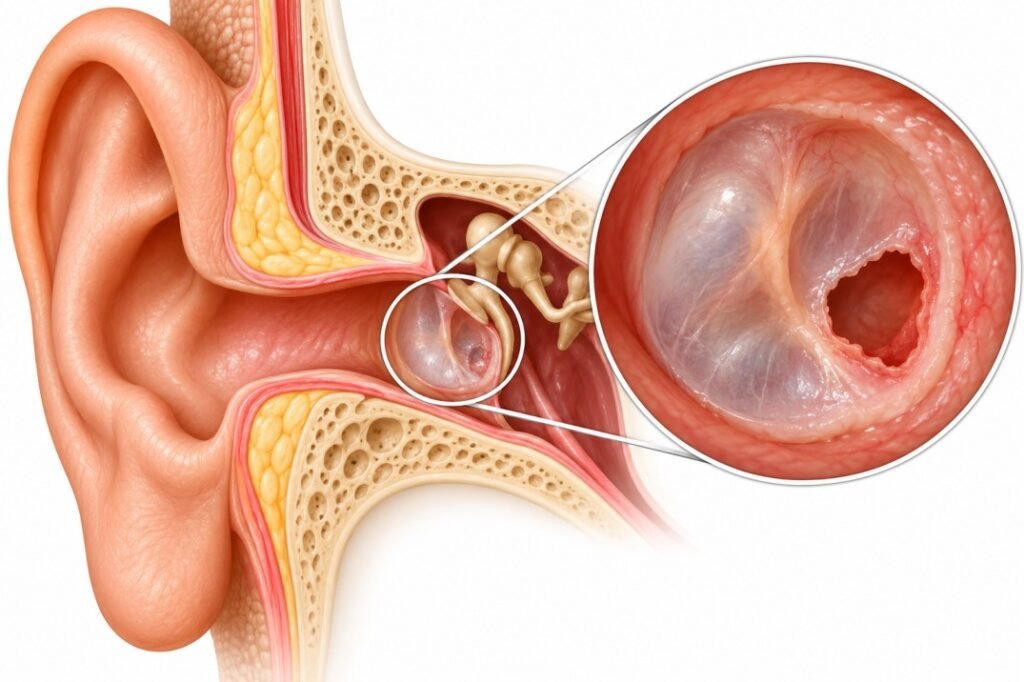
The eardrum, also known as the tympanic membrane, is a thin layer of tissue that vibrates when sound waves enter the ear. These vibrations help transmit sound to the small bones in the middle ear, allowing you to hear.
A perforated eardrum develops when this membrane develops a hole or tear. The size and location of the opening can influence hearing, symptoms, and healing time.
Small perforations may close naturally over several weeks. Larger tears or perforations associated with infection or other ear damage may need additional treatment.
If you suspect an eardrum injury, an ENT examination can help establish whether a perforation is present and whether the middle ear has also been affected.
Common Perforated Eardrum Symptoms
Recognising the symptoms early can help you decide when to seek medical attention.
1. Sudden Ear Pain
A perforation caused by an injury or sudden pressure change may produce sharp ear pain. Sometimes, the pain decreases after the eardrum tears.
If an ear infection is responsible, you may also experience fever, ear discharge, or a feeling of pressure inside the ear.
2. Reduced or Muffled Hearing
One of the most common perforated eardrum symptoms is reduced hearing in the affected ear. Sounds may seem quieter, muffled, or less clear than usual.
The degree of hearing loss depends on the size of the perforation and whether other structures in the ear are affected. Hearing may improve as the eardrum heals, but persistent changes require assessment.
3. Fluid or Blood Coming From the Ear
You may notice clear fluid, blood, or pus draining from the ear. This can happen after an injury or when an infection is present.
Keep the ear dry and avoid inserting cotton buds, oils, or unprescribed ear drops. If discharge continues or has an unpleasant smell, seek medical advice.
4. Ringing in the Ear
Some people experience tinnitus, which may sound like ringing, buzzing, or humming. It can occur alongside hearing changes and may require further evaluation if it persists.
5. Dizziness or Balance Problems
Dizziness can sometimes accompany an ear injury. However, severe vertigo, difficulty maintaining balance, or sudden hearing loss may indicate damage beyond the eardrum.
Seek urgent medical attention if these symptoms develop, particularly after an injury.
What Causes a Perforated Eardrum?
Understanding the cause helps an ENT specialist decide which treatment is appropriate.
Ear Infections
A middle ear infection can cause fluid and pressure to build up behind the eardrum. In some cases, the pressure causes the membrane to rupture, allowing fluid to drain into the ear canal.
Even if the pain decreases afterward, the infection may still require treatment.
Injury From Cotton Buds or Other Objects
Inserting cotton buds, hairpins, or other objects too deeply into the ear can damage the eardrum.
Avoid attempting to remove earwax using sharp objects. If you suspect an injury, have the ear examined rather than trying to clean it yourself.
Sudden Changes in Air Pressure
Rapid changes in pressure during air travel or diving can sometimes injure the eardrum. This is known as barotrauma.
If you experience ear pain, bleeding, or sudden hearing changes after a pressure-related event, arrange a medical assessment.
Loud Noise or Head Injury
An extremely loud sound, such as a nearby explosion, can cause acoustic trauma and may rupture the eardrum. A blow to the ear or a serious head injury can also cause a tear.
Significant bleeding, sudden hearing loss, or severe dizziness following trauma requires urgent assessment.
How Is a Perforated Eardrum Diagnosed?
If you have ear pain, discharge, or reduced hearing, an ENT specialist in Vadodara can examine your ear and determine whether the eardrum is damaged.
Diagnosis may involve the following:
Medical history: The doctor will ask about your symptoms, recent infections, injuries, and when the problem started.
Otoscopy: A lighted instrument called an otoscope is used to examine the ear canal and eardrum. This often helps identify a perforation.
Hearing assessment: A hearing test may be recommended to determine whether the perforation has affected sound transmission.
Additional investigations: If the injury is severe or other ear structures may be involved, further testing may be needed.
Not every patient requires all these tests. Your doctor will recommend investigations based on the symptoms and examination findings.
Perforated Eardrum Healing Time: How Long Does It Take?
One of the most common questions patients ask is how long a perforated eardrum takes to heal.
The answer depends on the size of the tear, its cause, whether infection is present, and whether other parts of the ear have been damaged.
Small perforations often heal naturally within a few weeks, while larger tears may take several weeks to a few months. Some perforations remain open and require specialist treatment.
During recovery, protect the ear from water and avoid anything that could cause further injury. Your doctor may schedule a follow-up examination to check whether the membrane is healing.
If you live in Vadodara or a nearby area and your hearing does not improve, or discharge continues, do not rely on the passage of time alone. An ENT assessment can help determine whether further treatment is needed.
Perforated Eardrum Treatment in Vadodara
The appropriate perforated eardrum treatment depends on the size of the opening, the cause of the injury, the presence of infection, and its effect on hearing.
1. Observation and Ear Protection
Many small perforations heal without surgery. Your doctor may recommend keeping the ear dry, avoiding further injury, and attending follow-up appointments.
Avoid swimming or allowing water to enter the affected ear until your doctor confirms it is safe.
2. Medication for Infection
If an infection is present, your doctor may prescribe appropriate medication. Antibiotics are not necessary for every perforation and do not directly close the hole.
Do not use leftover ear drops or home remedies without medical advice. Some ear drops are unsuitable when the eardrum is perforated.
3. Eardrum Patching
For selected perforations that do not heal naturally, a specialist may consider a patching procedure to encourage the membrane to close.
Whether this is suitable depends on the size and location of the perforation and the condition of the surrounding tissue.
4. Surgery to Repair the Eardrum
If the perforation remains open or causes persistent hearing problems or repeated infections, surgery may be recommended.
A procedure called tympanoplasty is used to repair the eardrum. If other middle-ear structures are damaged, additional treatment may be necessary.
Eardrum repair surgery in Vadodara should be considered only after an ENT specialist has assessed the perforation and discussed the benefits, risks, and alternatives.
Not every perforation requires surgery. Your treatment plan should be based on the examination findings and your individual needs.
When Is Micro Ear Surgery Needed?
Micro ear surgery may be considered when a perforation does not heal naturally or when the injury affects hearing or contributes to recurring ear infections.
An ENT surgeon may discuss surgical treatment if:
- The perforation remains open despite an appropriate period of observation.
- Hearing loss persists.
- Ear infections keep recurring.
- The perforation is unlikely to heal without intervention.
- Other structures in the middle ear may be damaged.
The procedure depends on the location and extent of the injury. Your surgeon will explain the available options and expected recovery before recommending treatment.
What Should You Avoid With a Perforated Eardrum?
Protecting your ear during recovery helps reduce the risk of further injury and infection.
- Keep the ear dry. Follow your doctor’s instructions when bathing or washing your hair.
- Avoid swimming until you have been advised that it is safe.
- Do not insert objects into the ear. Cotton buds can worsen the injury.
- Avoid unprescribed ear drops. Some preparations may damage structures inside the ear.
- Do not ignore hearing changes. Persistent or worsening hearing loss requires assessment.
- Attend follow-up appointments. An examination can confirm whether the eardrum has healed.
If you are recovering from an ear procedure, follow your surgeon’s specific instructions about cleaning, bathing, medication, and returning to everyday activities.
When Should You See an ENT Specialist in Vadodara?
Arrange an ENT consultation if you experience ear pain with discharge, a suspected eardrum injury, persistent muffled hearing, or symptoms that do not improve.
Seek urgent medical attention if you experience:
- Sudden hearing loss.
- Severe dizziness or difficulty maintaining balance.
- Significant bleeding after an ear or head injury.
- Severe or rapidly worsening ear pain.
- Fever with increasing pain or discharge.
Early assessment helps identify the extent of the injury and whether treatment is needed.
Final Thoughts
A perforated eardrum can cause pain, discharge, ringing, and reduced hearing, but many small tears heal naturally with appropriate care.
If you notice these symptoms in Vadodara or nearby areas, do not delay an assessment, especially if hearing changes suddenly or discharge continues. Keeping the ear dry, avoiding unprescribed ear drops, and following medical advice can help protect it during recovery.
With an accurate diagnosis and suitable treatment, many people recover well. If the perforation does not heal or hearing remains affected, an ENT specialist can explain whether further treatment or surgical repair is appropriate.
Frequently Asked Questions
What are the first signs of a perforated eardrum?
Common signs include sudden ear pain, muffled hearing, ringing, and fluid or blood coming from the ear. Some people also experience dizziness.
How long does a perforated eardrum take to heal?
Small perforations often heal within a few weeks, while larger tears may take longer. Some require specialist treatment if they do not close naturally.
Can a perforated eardrum be repaired?
Yes. Depending on the size and location of the perforation, treatment may involve observation, patching, or surgery such as tympanoplasty.
Can I fly with a perforated eardrum?
It depends on the injury and associated symptoms. Seek medical advice before flying if the perforation is recent or you have pain, discharge, dizziness, or hearing changes.
Where can I get a perforated eardrum checked in Vadodara?
You can contact Bharti ENT Care in Nizampura or Gotri, Vadodara, to enquire about an ENT consultation. The doctor can examine your ear and advise whether treatment or further investigations are necessary.