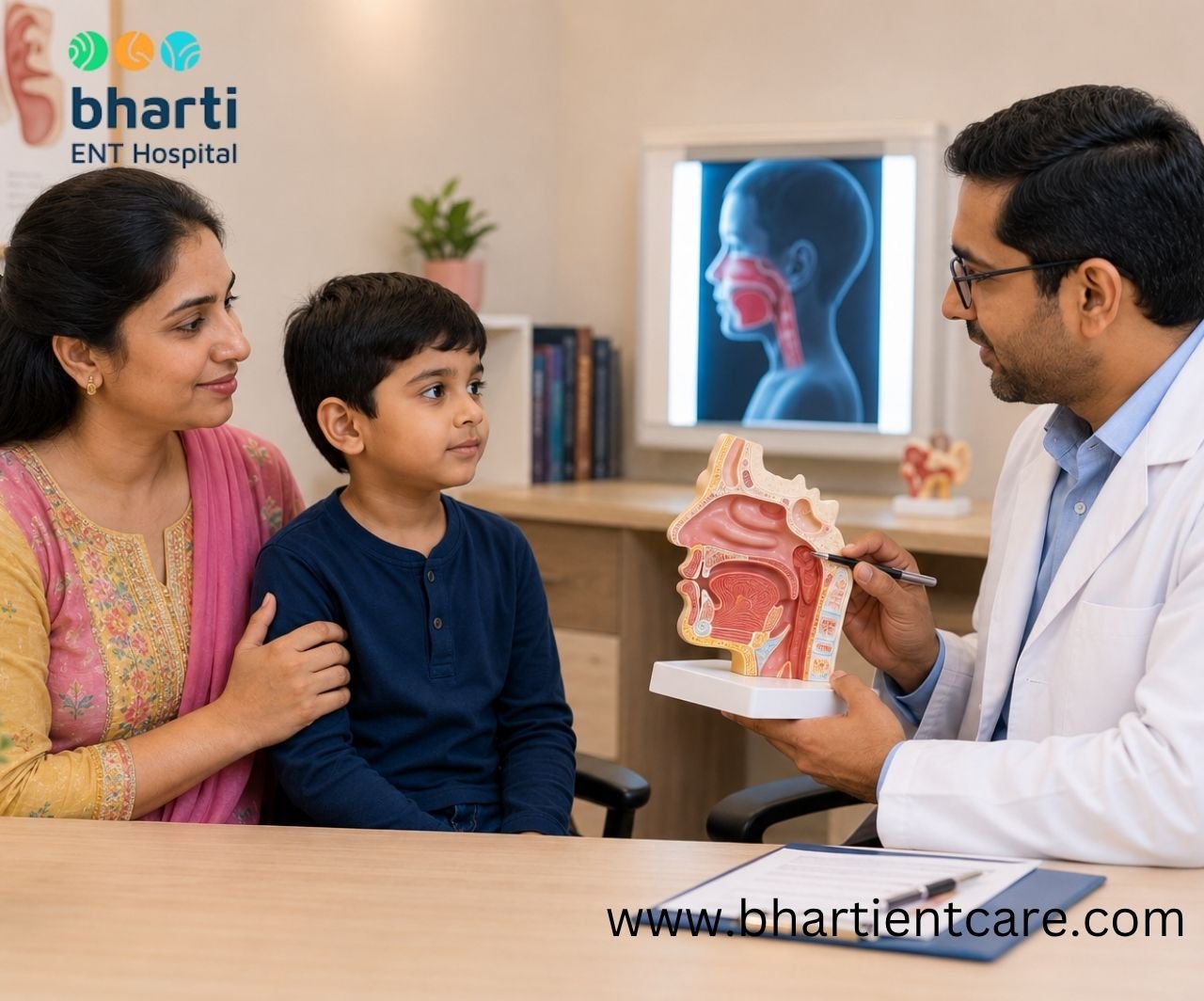
When enlarged, adenoids are associated with recurring ear and throat infections, breathing problems, snoring and sleep problems in children. At Bharti ENT Hospital, adenoid issues are thoroughly assessed to decide if medical management or surgery is the best approach to help ensure long-term symptom relief and improved airway health.
Adenoids are small areas of tissue behind the nose and above the throat. They are a part of the immune system and assist in trapping bacteria and viruses in early childhood. If the adenoids are enlarged or infected frequently, they can cause a number of health problems, particularly in children.
How Modern Adenoid Surgery Improves Recovery
When surgery is recommended there are a number of misconceptions that can cause anxiety for many parents. Even if symptoms have a significant impact on the child’s quality of life, families often delay treatment due to concerns about immunity, pain, speech or long recovery times.
Adenoid and tonsil surgery has become more comfortable and precise with modern surgical techniques, such as coblation-assisted surgery. The Coblation technology is an innovative application of controlled low-temperature radiofrequency energy that helps minimize damage to surrounding tissues, thereby limiting bleeding and post-operative pain.
Among the advanced adenoid surgery in Vadodara, there are also new surgical methods that have emerged in recent times which are more comfortable and safe for children and ensure better recovery.
Common Symptoms Linked to Enlarged Adenoids
Large adenoids can impact breathing, sleeping patterns, ear health and comfort during the day. Adenoids are situated behind the nose, and swelling can at least partially block the air flow and result in a number of symptoms.
Children with enlarged adenoids might suffer from:
- Persistent mouth breathing
- Snoring loudly while sleeping
- Difficulty sleeping or sleep apnea
- Frequent throat or ear infections
- Nasal blockage
- Difficulty breathing through the nose
- Recurrent sinus congestion
- Changes in speech tone
Disturbed sleep patterns from airway obstruction can also lead to daytime fatigue, irritability, poor concentration or feeding difficulties for some children.
In some instances, the enlarged adenoids have been associated with recurrent tonsils. Tonsils and adenoids are often treated simultaneously by ENT surgeons as simultaneous enlargement may be associated with impaired breathing and swallowing.
Some ENT clinics that offer coblation procedures might conduct detailed evaluations of the patient, such as an examination of the nose and throat, evaluation of any symptoms relating to sleep and past infections before treatment is planned.
Parents should never be misled into thinking that snoring or mouth breathing is always harmless. If symptoms do not resolve, it may be a sign of airway obstruction which can impair sleep and development.
Common Myths About Adenoid Removal
There are a number of misconceptions about adenoid surgery that confuse parents. Knowing the facts enables families to make informed decisions, according to medical guidance and not fear or misinformation.
Myth 1: Adenoid Removal Weakens Immunity Permanently
This is one of the most frequently held misconceptions. In early childhood, the adenoids are part of the immune system, while numerous other tissues in the body maintain immune function following removal. If the adenoids are enlarged or persistently infected, they may cause more health issues than benefits.
Myth 2: Surgery Is Always Extremely Painful
New coblation devices are created to minimize tissue injury, bleeding and post procedure pain. Most children do get better following adequate medication and hydration.
Myth 3: All Snoring Children Need Surgery
Not all children who snore need surgery. ENT doctors assess symptoms, breathing pattern, how often the person gets infected and how severe the airway blockage is before deciding on treatment.
Myth 4: Adenoids Grow Back in Every Case
In rare cases, a small amount of tissue may be left, but regrowth that leads to symptoms once more is rare after proper surgical removal.
Myth 5: Recovery Takes Several Months
Depending on the procedure and child’s overall health, most children recover within a couple of weeks. Detailed care post surgery instructions are provided by the doctors for a smoother healing.
The goal of modern coblation surgical centres for ENT surgery is to achieve minimal recovery pain and better breathing and infection management. Knowing how adenoid removal improves breathing helps in understanding airway-related ENT treatment.
Facts About Modern Adenoid and Tonsil Surgery
Thanks to advances in medicine, adenoid and tonsil surgery are safer and can offer a more comfortable recovery. Because it employs temperatures that are lower than traditional surgical techniques, Coblation-assisted surgery is also becoming more popular as it can help to minimize tissue damage and reduce the discomfort that may occur during recovery.
Some of the types of coblation surgery services are:
- Adenoid removal procedures
- Tonsil removal procedures
- Airway obstruction management
- Recurrent throat infection treatment
- Sleep-disordered breathing management
Children who need surgery are normally assessed using a physical examination, review of symptoms, assessment of the throat, and sometimes imaging or nasal endoscopy, depending upon the severity of symptoms.
When parents think about tonsil surgery in Vadodara, they want to find a center that not only offers cutting-edge surgical methods but also has a pediatric aftercare program in place for their child’s safe and speedy recovery, ensuring they experience lasting relief.
Recovery Tips After Adenoid Removal
Taking good care of children after adenoid surgery is also crucial to their comfortable recovery. Recovery is usually gradual, but taking medical advice is important to minimize the risk of complications.
Encourage Adequate Hydration
Children should drink adequate amounts of fluids to keep their throat moist and to aid healing after surgery.
Provide Soft Foods Initially
During initial recovery, soft foods like soups, yogurt, soft rice and mashed veggies tend to be easier to chew and swallow.
Follow Medication Instructions Carefully
Any medications for pain or for fighting infection should be administered as directed by the doctor.
Avoid Intense Physical Activity
Avoid running, sports, and strenuous activities during the early healing phase to minimize the risk of bleeding.
Attend Follow-Up Visits
Follow-up appointments are important to ensure proper healing and recovery.
During recovery, you may experience some mild throat discomfort, temporary bad breath or minor voice changes, but these issues should gradually get better. If the child experiences high fever, excessive bleeding, difficulty breathing or severe dehydration symptoms, parents should contact the doctor.
Early intervention for airway obstruction and recurrent infections may also help improve sleep patterns, focus, appetite and comfort in growing children.
Why Accurate ENT Evaluation Matters
Surgery is not always needed for children who have throat infections or snoring. An ENT examination will help to determine if the symptoms are due to enlarged adenoids, tonsils, allergies, sinus conditions, or other airway issues.
ENT doctors thoroughly consider the severity of the symptoms, quality of sleep, frequency of infections, breathing problems and overall health before suggesting surgery. Sometimes, medication or observation is enough for long-term relief, and sometimes, surgical treatment is necessary.
Parents should not delay medical evaluation if symptoms have been present for a prolonged time. If left untreated, chronic airway obstruction can have a negative impact on sleep, learning, growth, and behavior in children during the day.
Advanced ENT treatment at Bharti ENT Hospital ensures that children receive targeted treatment with a focus on safer recovery, better breathing, and long-term airway health, all while providing them with advanced ENT care.
Frequently Asked Questions (FAQs)
What is coblation adenoid surgery?
Coblation surgery is a procedure that involves the removal of tissue with controlled radiofrequency energy, causing less damage and discomfort during the surgery.
What are the services offered in coblation tonsil and adenoid treatment?
These can include ENT evaluation, airway assessment, coblation surgery, infection management and follow up after surgery.
What is the average recovery time for adenoid surgery?
Children typically get better in 1-2 weeks with rest, fluids and medication assistance.
Is the immunity permanently affected following adenoid removal?
No, the body does have several immune defense mechanisms and most children have normal immunity following surgery.