
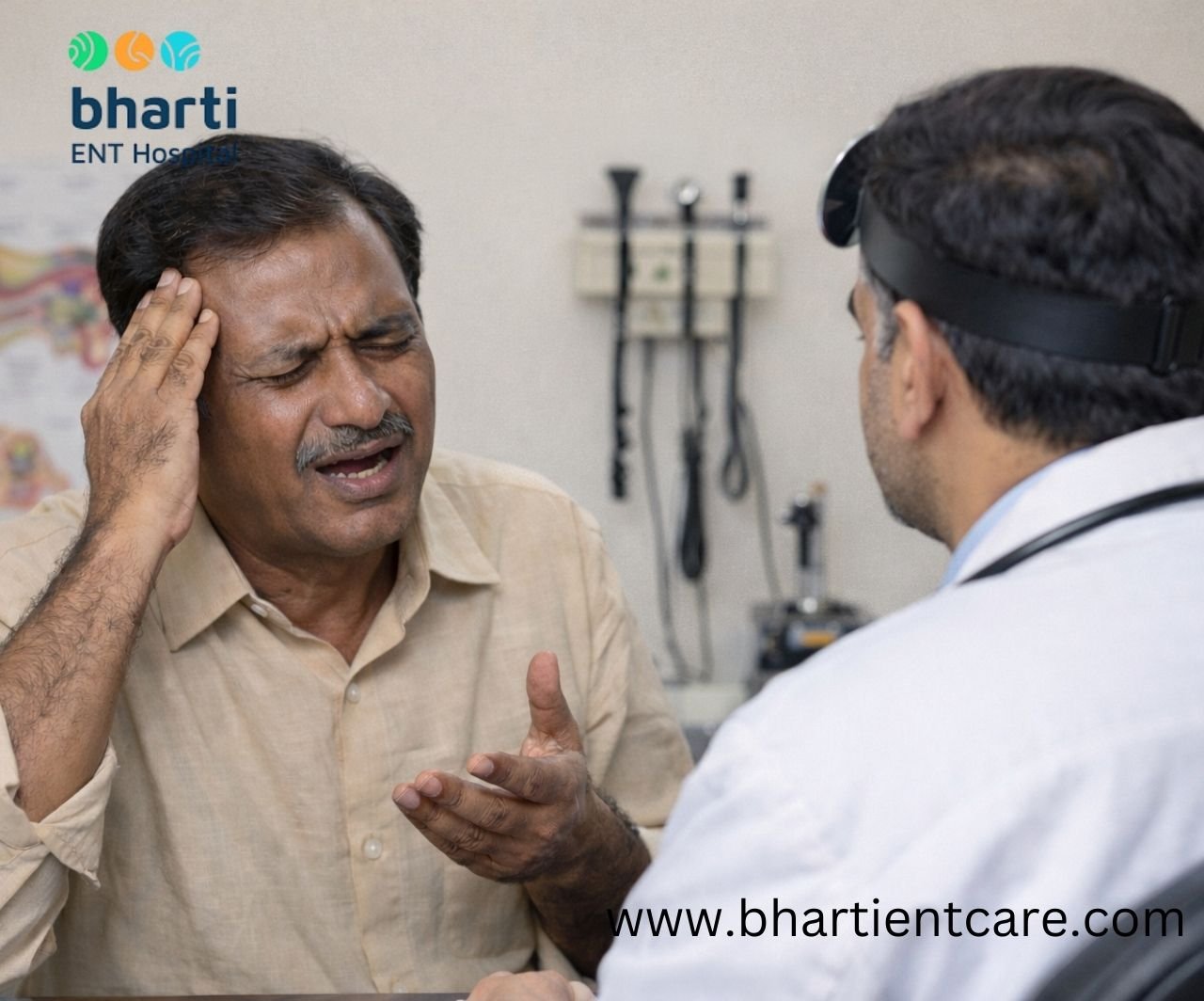
Symptoms such as sinus pressure, ear fullness, popping feelings, and unexplained pains are increasingly reported by individuals under constant stress. A large number of patients visit ENT clinics with a very precise question: Can stress cause sinus and ear problems? At the Bharti ENT Hospital, experts are used to examining such issues and making sure that stress may play a major role in regulating sinus function and ear pressure, without apparent infection or allergy.
Stress has a global systemic impact on the whole body, including the fine systems of pressure-balancing in the sinuses and ears. This imbalance may result in the development of persistent symptoms that disrupt daily comfort, sleep, and focus when unchecked.
Understanding the Sinus–Ear Pressure System
A fine pressure system connects the ears with the sinuses. Air-filled cavities lined by mucous membranes are the sinuses and the middle ear depends on the Eustachian tube that maintains pressure in the ear and the environment.
When this system is working without problems, the pressure is automatically adjusted. Nevertheless, stress may impair muscle coordination, blood circulation and nerve impulses in this area. That is why patients often ask themselves whether can stress cause sinus and ear problems, even when scans are normal.
How Stress Affects Sinus Function
Stress causes the release of cortisol and adrenaline hormones, which influence the blood vessels and immune system. These changes in the nasal and sinus lining may lead to swelling, decreased drainage, and thickened mucus.
In the long run, poor sinus ventilation leads to a buildup of pressure, facial heaviness, and congestion. Such sensations tend to increase in stressful times, which confirms worries about whether can stress cause sinus and ear problems as a plausible medical interpretation. Sinus dysfunction is known clinically to be paramount in patients who have chronic anxiety or are likely to experience high-pressure lifestyles.
Impact of Stress on Ear Pressure and Hearing
The ears are dependent on small muscles and pressure valves in order to work properly. Stress leads to tension of the neck, throat and jaw, which directly influences the Eustachian tube. The failure of this tube to open correctly results in the inability to equalize the air pressure and this causes ear fullness, diminished hearing or a popping sound.
Fluid can also build up in the middle ear, which adds to the discomfort in more chronic cases. ENT specialists usually find that, prior to a decision related to complex interventions like micro ear surgery, stress needs to be addressed first.
The Role of the Autonomic Nervous System
Involuntary body functions, such as the blood circulation and the activity of glands, are subject to the control of the autonomic nervous system. This system is overstimulated by chronic stress, which interferes with the normal secretions of sinus and ear pressure.
This increased sensitivity causes the patients to be more sensitive to the slight changes in pressure that patients could otherwise not notice. This causes symptoms to be severe even with mild clinical findings, causing many to keep on asking Can stress cause sinus and ear problems even after being reassured.
Distinguishing Stress-Related Symptoms from Disease
Although the stress may cause sinus and ear symptoms, it is crucial to eliminate infections, allergies, nasal polyps, or ear diseases. ENT assessment usually includes nasal endoscopy, ear inspection, hearing assessment, and imaging as needed.
The exclusion of serious conditions is followed by treatment aimed at restoring the pressure balance and dealing with the stress contributors. The step will eliminate needless processes and will make sure that micro ear surgery is done only when it is really needed.
Medical Management and Conservative Treatment
The first line of treatment is usually nasal sprays, steam inhalation, hydration, and drugs to decrease swelling of the mucosa. Ear pressure problems can be treated either using decongestants, autoinflation or temporary medical treatment.
Stress management is also important. Symptom recurrence is decreased by breathing exercises, sleep regulation and lifestyle changes. Having an insight that stress can lead to sinus and ear issues, the patients will be more compliant with holistic treatment.
When Micro Ear Surgery Is Considered
An extended pressure imbalance or chronic ear disease can, in some instances, cause ear damage. In the event of failure of the conservative measures, micro ear surgery can be considered as a solution to restore function and avoid complications.
This is a surgery that involves the use of precise tools to treat issues in the middle ear and leave the surrounding structures intact. Micro ear surgery is not very much advised unless a careful examination and confirmation that a structural correction is required.
Recovery and Long-Term Outcomes
Sinus and ear conditions recovered under the influence of stress require medical treatment as well as control of stress. When patients are stressed, they tend to have prolonged relief without incorporating invasive measures.
In patients who are in need of micro ear surgery, the success rate is usually positive in case there is adherence to post operative management and changes in living. Preventive measures that address both physical and psychological aspects are key to long-term success.
Patient Education and Preventive Care
Prevention is centered on education. Knowledge of the influence of stress on sinus drainage and ear pressure will enable the patients to understand the early onset of warning signals.
Having known how can stress cause sinus and ear problems, people can take prompt medical attention, reduce anxiety, and prevent the results of chronic complications that might otherwise lead to micro ear surgery.
Facilitating Long-Term Ear Well-Being
The medical basis of the question that can stress cause sinus and ear problems is very definite and is based on hormonal response, muscle tension, and imbalance in the nervous system. Most patients will enjoy long-term relief with proper diagnosis, specific treatment, and stress management. In some cases, more complex procedures like micro ear surgery offer a good means of correcting structural problems. Bharti ENT Hospital offers a comprehensive ENT approach that addresses the physical pressure valve and underlying stress areas, facilitating long-term sinus and ear well-being.
Frequently Asked Questions (FAQs)
How are sinus and ear pressure problems evaluated?
Assessment will involve ENT check-up, nasal endoscopy, ear check and hearing test.
What pre-surgical treatments are possible?
Medical treatment involves nasal sprays, drugs, pressure-equalizing measures and stress management.
Who are the specialists at Bharti ENT Care Hospital?
The hospital also has ENT specialists trained in otology, rhinology, throat surgery, and head and neck surgery.
What are the indications of micro ear surgery?
Micro ear surgery is recommended in case of structural damage by chronic ear disease or pressure imbalance.
Is micro ear surgery painful?
It is performed under anesthesia, and the pain in the recovery is bearable.