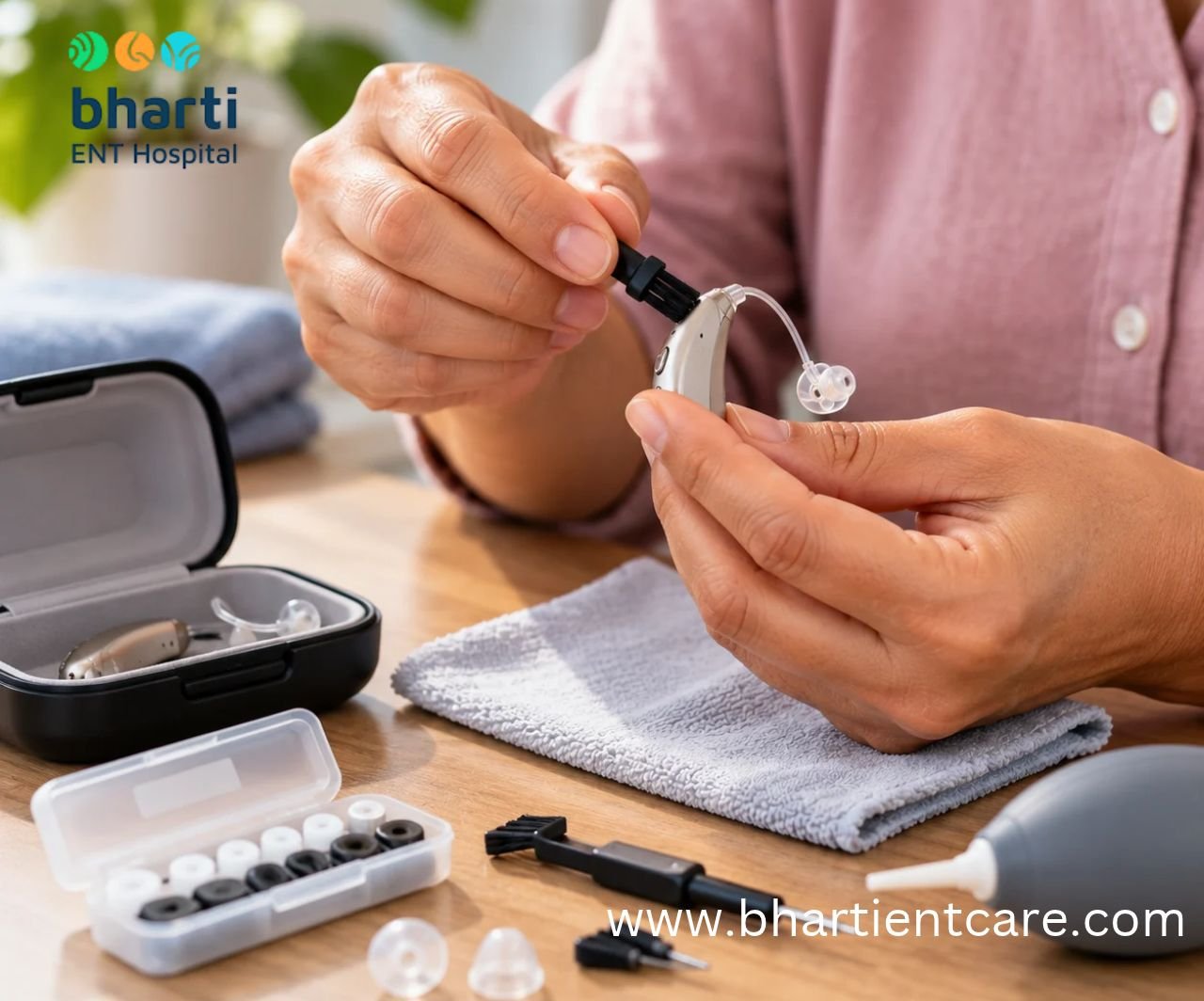
Hearing aids help people follow conversations, enjoy time with family, and hear everyday sounds more clearly. Since most people wear them for several hours a day, these small devices are regularly exposed to sweat, earwax, dust, and moisture. Over time, these can affect sound quality and interfere with how well a hearing aid works.
Regular hearing aid maintenance helps keep your device clean, comfortable, and functioning properly. The good news is that caring for hearing aids does not need to be complicated. A few simple habits, along with occasional professional checks, can help prevent common problems and reduce unnecessary repairs. Your hearing aids should fit comfortably throughout the day. If they cause irritation, feel loose, or become uncomfortable after extended use, review these tips to improve comfort while using hearing devices and consult your audiologist if the problem continues.
Whether you use a behind-the-ear model or a receiver-in-canal device, knowing how to clean and care for it can make a difference in your everyday experience.
Why Hearing Aid Maintenance Matters
Hearing aids contain small microphones, receivers, and electronic components that need proper care. When earwax or debris blocks these parts, you may notice reduced volume, unclear sound, or unwanted whistling.
Moisture from sweat, humidity, or accidental water exposure can also affect performance. Neglecting routine cleaning may lead to avoidable problems and, in some cases, costly repairs.
Regular maintenance can help you:
- Keep sound clear and consistent.
- Reduce earwax and debris buildup.
- Identify damage before it becomes more serious.
- Improve comfort during daily use.
- Extend the useful life of your hearing aids.
Following a few practical hearing aid care tips can help you get the best performance from your device without spending much time on maintenance.
How Often Should Hearing Aids Be Cleaned?
How frequently you need to clean your hearing aids depends on the device, your daily activities, and how much earwax or sweat you produce.
For most users, a quick daily check and cleaning of accessible surfaces is a useful routine. More thorough cleaning should follow the manufacturer’s instructions.
A simple schedule may look like this:
- Daily: Wipe the hearing aids with a clean, dry, soft cloth. Check for visible earwax, dust, or moisture.
- Regularly: Inspect the microphone openings, receiver, and ear tips for buildup.
- As recommended by the manufacturer: Clean or replace wax filters, domes, and other removable parts.
- During follow-up appointments: Ask your audiologist to check the device’s condition and clean components that require professional attention.
Avoid using the same cleaning method for every hearing aid. Some models have removable parts, while others require more careful handling.
How to Clean Hearing Aids: A Step-by-Step Guide
Learning how to clean hearing aids properly can help prevent common problems without damaging delicate components.
Before you begin, wash and dry your hands. If your hearing aids use disposable batteries, follow the manufacturer’s instructions about switching the devices off or opening the battery compartment. For rechargeable models, remove them from the charger before cleaning.
1. Clean the Exterior
Use a clean, dry, soft cloth to wipe the outside of the hearing aid. This removes sweat, skin oils, and everyday dirt.
If your device sits behind your ear, pay attention to the areas that come into contact with your skin. For hearing aids worn inside the ear, clean the accessible outer surfaces and removable ear tips according to the manufacturer’s instructions.
Do not rinse the hearing aid under a tap or use household cleaning products. Even if a device is water-resistant, that does not mean it can be cleaned with running water.
2. Clean the Microphone Openings
Microphones collect sound from your surroundings. If their openings become blocked by dust or debris, the hearing aid may produce weak or unclear sound.
Use the cleaning brush supplied or recommended by the manufacturer. Gently brush the accessible openings, following the directions provided for your particular model.
Do not push the brush, a pin, or any sharp object deep into the microphone openings. Doing so may damage the components.
If the microphone still appears blocked or the sound remains unclear after cleaning, arrange a professional check rather than attempting to open the device.
3. Clean the Receiver
The receiver delivers amplified sound to your ear. In receiver-in-canal hearing aids, it is positioned in the ear canal and can be particularly exposed to earwax.
Inspect the receiver and ear tip for visible buildup. Use the cleaning tools recommended for your device, and avoid pushing debris further into the opening.
If the ear tip is removable, follow the manufacturer’s instructions for cleaning or replacing it. Do not pull forcefully on the receiver wire or attempt to dismantle the hearing aid.
You can learn more about Receiver-in-Canal Hearing Aids and how their design differs from other hearing aid styles.
4. Check the Ear Tips and Tubing
Ear tips, domes, and tubing can collect earwax and moisture over time. Check them regularly for blockages, cracks, or signs of wear.
Some removable parts can be cleaned separately according to the manufacturer’s instructions, while others may need replacement. Make sure every component is completely dry before reattaching it.
If tubing becomes hard, cracked, or discoloured, ask your hearing care professional whether it needs replacing.
Wax Filter Replacement: When and How to Do It
Many hearing aids use a small wax filter to stop earwax from entering the receiver. When the filter becomes blocked, sound may become quieter or stop altogether.
Check the filter regularly, especially if you notice a sudden reduction in volume despite having a charged battery and clean device.
If the filter is replaceable:
- Check the manufacturer’s instructions for your specific model.
- Use the correct replacement filter.
- Remove the old filter using the supplied tool.
- Install the new filter as directed.
- Make sure it is seated correctly before using the hearing aid.
Do not use pins or other sharp objects to remove earwax from the receiver. If you are unsure how to replace the filter, ask your audiologist to demonstrate the process.
It is also important to remember that earwax inside the ear canal is different from earwax blocking the hearing aid. If you experience blocked ears or muffled hearing, professional assessment may be needed.
How to Protect Hearing Aids From Moisture
Moisture is one of the common environmental factors that can affect hearing aid performance. Sweat, rain, humidity, and accidental splashes may interfere with delicate components.
Here are some practical ways to protect hearing aids from moisture:
- Remove your hearing aids before showering or swimming unless the manufacturer specifically permits the intended exposure.
- Wipe away sweat after exercise using a soft, dry cloth.
- Keep the devices away from excessive humidity.
- Use a hearing aid drying system if recommended for your model.
- Follow the manufacturer’s instructions if your device becomes wet.
Never use a hair dryer, heater, microwave, or direct sunlight to dry your hearing aids. Excessive heat can damage their components.
If a hearing aid gets wet and stops working, follow the manufacturer’s drying instructions and seek professional advice if the problem continues.
What Not to Use When Cleaning Hearing Aids
Using the wrong cleaning products can damage hearing aids, even when the intention is to keep them hygienic.
Avoid the following unless the manufacturer specifically recommends a product or method:
- Water directly on the electronic device.
- Alcohol, household disinfectants, or cleaning sprays.
- Soap or detergent on the hearing aid body.
- Sharp objects such as pins, needles, or toothpicks.
- Excessive heat from a hair dryer or heater.
- Compressed air that may force debris deeper into the device.
- Abrasive cloths or rough brushes.
Also, do not dismantle the device to clean its internal components. If something appears stuck inside the microphone or receiver, professional cleaning is safer.
Hearing Aid Storage Tips
Proper storage helps protect hearing aids when they are not being worn.
Keep these points in mind:
- Store your hearing aids in their designated case when not in use.
- Keep them away from excessive heat and moisture.
- Store them somewhere children and pets cannot reach.
- Follow the manufacturer’s instructions for rechargeable devices.
- If your model uses disposable batteries, follow the recommended storage and battery-handling instructions.
- Avoid leaving hearing aids loose in a pocket, handbag, or drawer where they could be damaged.
If you remove your hearing aids at night, use that time to check for visible debris and allow them to dry as recommended.
Hearing Aid Maintenance Tips for Everyday Use
A consistent routine is usually more useful than occasional intensive cleaning. These simple hearing aid maintenance tips can help you avoid common problems.
Make cleaning part of your daily routine. A quick check at the end of the day helps you spot visible buildup before it becomes a problem.
Handle the device gently. Hold your hearing aids securely when cleaning or inserting them, and avoid pulling on delicate wires or tubing.
Check the sound regularly. If your hearing aids suddenly become quieter, inspect the battery or charging status and look for visible blockages. Do not assume that every sound problem requires a replacement.
Pay attention to comfort. If the hearing aids cause irritation, feel loose, or no longer fit properly, ask your audiologist to check the fit.
Attend follow-up appointments. Routine checks can help identify wear, changes in hearing, and problems that may not be obvious during home cleaning.
When Is Professional Hearing Aid Cleaning Needed?
Home cleaning is suitable for routine care, but some problems require professional attention.
Consider visiting your audiologist if:
- Your hearing aids remain quiet after basic cleaning.
- One device repeatedly stops working.
- You notice distorted sound or persistent whistling.
- Earwax appears to be lodged deep inside the receiver.
- The device has been exposed to water.
- Tubing, ear tips, or other components are damaged.
- The hearing aids cause persistent discomfort.
- You notice a change in your hearing.
A hearing care professional can inspect the device, clean accessible components, check the fit, and determine whether a filter, receiver, or other part needs replacement.
If your hearing aids continue to perform poorly, the problem may not be caused by dirt alone. Your hearing may have changed, or the device may require adjustment.
A professional hearing aid fitting and assessment can help determine whether your current device remains appropriate for your needs. Your audiologist can also advise you on suitable cleaning methods for your particular hearing aid.
Final Thoughts
Regular hearing aid maintenance does not need to be difficult. Cleaning the exterior, checking the microphone and receiver, replacing wax filters when needed, and protecting the device from moisture can help keep your hearing aids working properly.
The most important thing is to follow the manufacturer’s instructions and avoid using cleaning methods that could damage delicate components. If your hearing aids remain quiet, become uncomfortable, or stop working despite basic care, seek professional advice rather than attempting internal repairs.
With a consistent cleaning routine and regular audiology checks, you can help maintain your hearing aids, reduce avoidable problems, and continue using them comfortably in everyday life.