
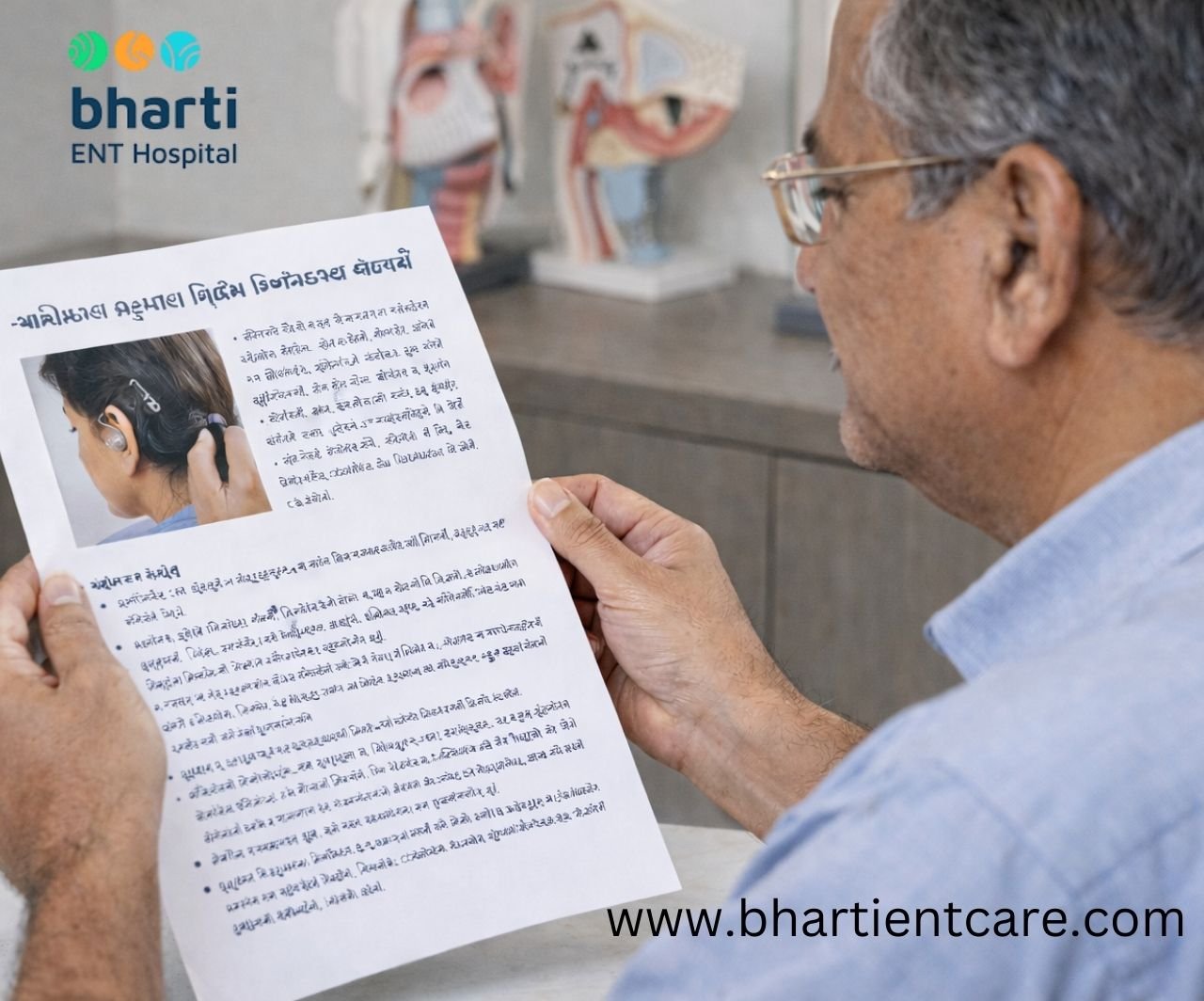
The deafness may impair communication, self-confidence, and quality of life, particularly when standard hearing aids are no longer effective to provide enough value. A cochlear implant is a medically proven intervention that provides individuals with severe to profound hearing impairments with access to sound and spoken language. At Bharti ENT Hospital, the patient with such a developed treatment in mind mostly seeks to know what to expect after the cochlear implant surgery, not only in a medical sense, but in real life, in rehabilitation, and even in the long run.
The knowledge about the recovery process enables patients and their families to be well prepared psychologically, physically, and emotionally for the transformation that will happen. A cochlear implant is not an instant cure, but a planned procedure that takes place over weeks and months. Being informed about what to expect after cochlear implant surgery can enable the patient to take an active part in the recovery process, adhere to rehabilitation guidelines and get the best results with the hearing device.
The sections below will present professional reflections of the post-surgery experience, both in short-term and long-term adjustment.
Understanding the Purpose of a Cochlear Implant
A cochlear implant is a surgically implanted electronic device that is used to bypass the damaged inner ear structures and stimulate the auditory nerve. The cochlear implant, unlike hearing aids, which enhance sound, translates sound to electrical signals that the brain learns to interpret. This difference is important in explaining what to expect after cochlear implant surgery because hearing with an implant is a learning process and not an immediate perception of natural sounds.
Patients must not expect to have instant clarity, but a gradual hearing improvement after the cochlear implant surgery. The brain requires time to adjust itself to new sound signals, and this is the reason why post-operative programming and auditory therapy are so important. The awareness of this process can be used to deal with expectations and anxiety in the initial recovery.
According to professionals, a cochlear implant is best used along with organized follow-up care. Surgery is just the initial step; rehabilitation and engagement of patients in the long term are the key to success.
Immediate Recovery After Cochlear Implant Surgery
The immediate post-operative phase is generally easy. Cochlear implant surgery is conducted under general anesthesia and normally involves brief hospitalization or same-day discharge, depending on the health of the individual. Patients can complain of slight pain, swelling in the area of the incision, or fullness in the ear.
Regarding what to expect after cochlear implant surgery, one should mention that a person may experience temporary dizziness or a slight sense of imbalance. The symptoms normally disappear in a matter of days as the inner ear adapts. Physicians usually prescribe rest, head elevation, and medicines to aid in the healing process.
The surgical area should be clean and dry, and patients are recommended to avoid excessive activity for a short time. This recovery period forms the basis of effective device activation and hearing prognoses.
The Healing Phase Before Device Activation
Hearing immediately after the cochlear implant surgery is one of the most frequently asked questions concerning what to expect after cochlear implant surgery. It is necessary to know that the implant is not activated immediately. It takes about two to four weeks to heal, and then the external processor can be fitted and switched on.
It is a period when the body is internally healing, and the swelling around the implant site dies down. Patients might feel eager or anxious, but such waiting time is needed to achieve the maximum performance of the device. Experts recommend spending this period on acquiring knowledge on how to take care of the devices, how to maintain them, and what rehabilitation process awaits them.
This stage may be emotionally difficult because patients expect to witness improvements. Effective communication with healthcare providers will allow for keeping the confidence and preparing patients for the following step of the journey.
Device Activation and Early Sound Experiences
One of the milestones when it comes to what to expect after cochlear implant surgery is the activation day. The external sound processor is attached, and the implant is programmed during this appointment. Patients cannot expect to have normal hearing at this stage; initial sounds can be mechanical, distorted, or strange.
This is a normal temporary experience. The brain learns gradually to decode the new electrical impulses into meaningful sound. Audiologists fine-tune the device settings in a number of sessions in order to maximize comfort and clarity. These adjustments are essential for success in the long run with the cochlear implant.
Emotional reactions are common in patients during activation, which may include excitement and overwhelm. Professional support and encouragement enable people to remain committed to consistent improvements, as opposed to immediate excellence.
Auditory Rehabilitation and Speech Therapy
Rehabilitation is also an essential element of post-cochlear implant surgery expectations. The brain is adjusted to new sound input with the help of auditory training and speech therapy. These sessions educate the patient on how to identify sounds in the environment, perceive speech and communication skills.
Consistency is key. Frequent therapy sessions as well as daily practice of listening at home, make a huge impact. These rehabilitation plans might be different in adults and children, but the objective is the same: to maximize the advantages of the cochlear implant.
Experts emphasize that rehabilitation is not a temporary investment. The development extends over months and even years, and the hearing and speech comprehension get better as time passes.
Daily Life Adjustments After Surgery
Life slowly gets back to normal after the cochlear implant surgery, but there are some changes that are considered part of what to expect after cochlear implant surgery. The patients are taught how to take care of the external processor, how to handle batteries or charging systems and how to safeguard the device against moisture.
The social interactions might not be the same at first as the patients adjust to new sound perceptions. It may be difficult at first with background noise or multiple speakers, or unfamiliar environments. These become manageable with practice and adjustment of devices.
Professionals would advise patients to be patient and proactive. The slow introduction to various listening conditions enhances auditory quality and develops confidence in face-to-face communication.
Long-Term Hearing Outcomes and Expectations
The success of a cochlear implant in the long term is determined by a number of variables, which include the length of hearing loss, the regularity of the use of the device and the willingness to rehabilitate. Speaking about what to expect after cochlear implant surgery, professionals point out that hearing results get better over time, not immediately.
Several patients show great progress in speech understanding, telephone conversations and social activities. The brain keeps changing, and therefore, music perception and sound quality continue to improve. Regular follow-up appointments ensure that the implant settings are maintained at their optimum with the development of hearing skills.
Having realistic expectations allows patients to be motivated and content with progress. A cochlear implant is a long-term investment in hearing and quality of life.
Emotional and Psychological Adaptation
This emotional experience is the most neglected aspect of what to expect after cochlear implant surgery. Access to sound is sometimes overwhelming to people who have suffered long-term hearing loss. Excitement, frustration or even fatigue are all normal during the process of adaptation.
Family, therapists, and healthcare support are some of the critical elements of emotional well-being. Participating in the support groups or linking with other users of the cochlear implant can be reassuring as well as informative.
Experts stress the idea that emotional adaptation is as significant as physical healing. The balanced approach results in increased overall satisfaction with the cochlear implant experience.
Improving Quality of Life Through Sound
Knowledge of what to expect after cochlear implant surgery makes the patients approach the journey with insight and assurance. Surgical recovery and device activation, to rehabilitation and emotional adaptation, are important phases for significant improvement of hearing.
At Bharti ENT Hospital, the emphasis on holistic care will make sure that patients, in addition to the high-level surgical care, will get professional help and guidance to achieve success in the long term. A cochlear implant can bring about better communication, interaction, and general living with realistic expectations, regular rehabilitation, and professional guidance.
Frequently Asked Questions (FAQs)
What services does the cochlear implant treatment at Bharti ENT Hospital cover?
They include evaluation, surgery, device programming, and post-operative rehabilitation.
Is surgery on the cochlear implant safe?
It is, indeed, a well-established practice that is conducted by a qualified ENT specialist.
What are the different specialists at Bharti ENT Care?
The hospital also has fellowship-trained ENT specialists who specialize in otology, rhinology, throat surgery and head and neck surgery.
Can an ENT specialist treat dizziness and vertigo?
Yes, vertigo and balance disorders are diagnosed and treated, including BPPV and vestibular neuritis.