Conversations can be frustrating and tiring if you have hearing loss. Comfort, visibility and sound quality are factors that many people are afraid of when it comes to using hearing aids.
The RIC Hearing Aids are one of the most popular hearing solution products, which feature a discreet design and offer improved hearing performance. Bharti ENT Hospital provides a full hearing assessment and individualized recommendations for each patient, based on their hearing needs and lifestyle. Learning more about Receiver-in-Canal hearing aids can assist you in determining if they are the appropriate hearing instrument for you and your hearing needs.
What are Receiver-in-Canal (RIC) Hearing Aids?
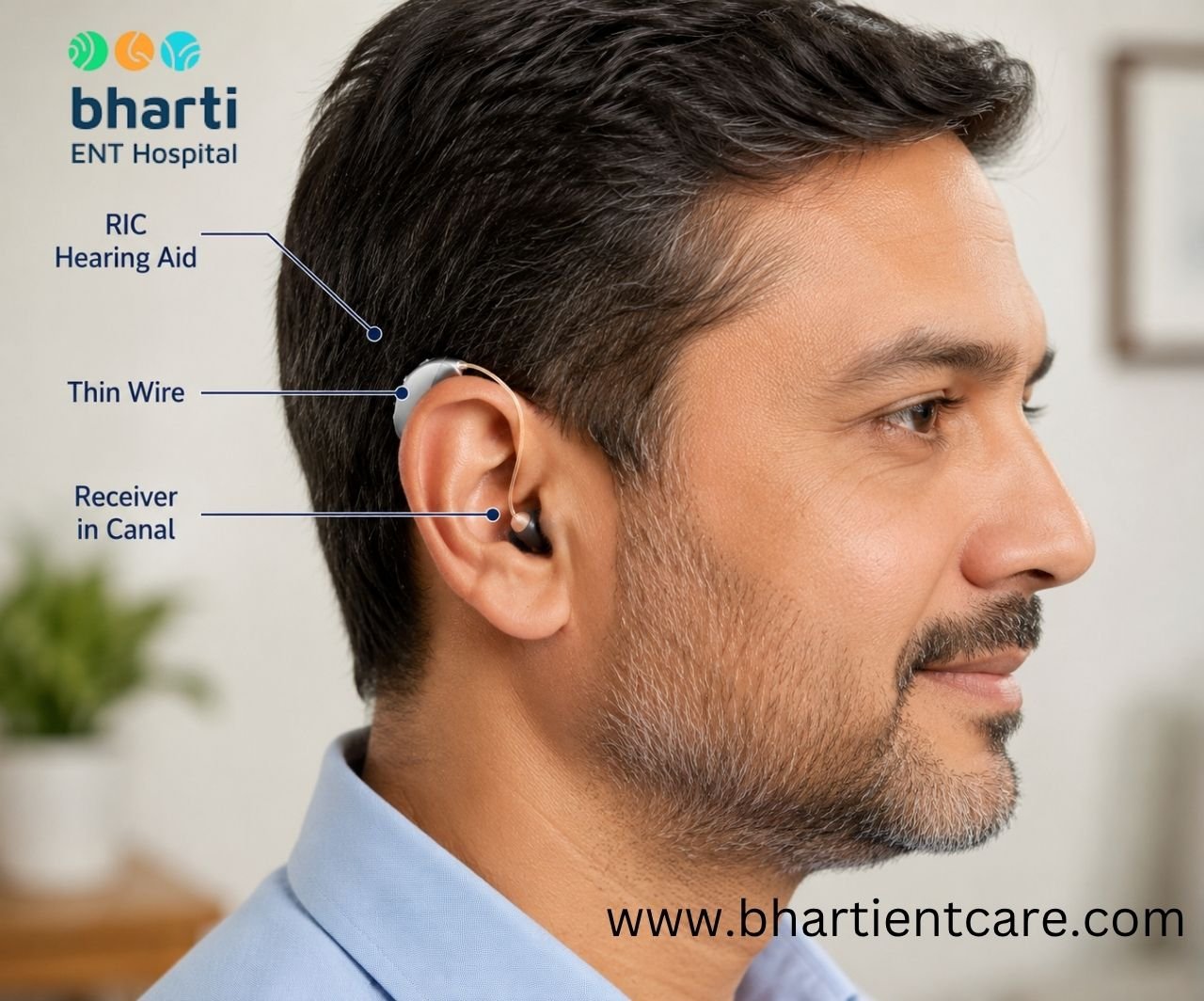
The RIC hearing aids are a specialized style of hearing aid that features a receiver (also known as a speaker) inside the ear canal and a main unit behind the ear. The design of the hearing aid is slightly different from other BTE devices as a thin wire is used to link the receiver to the hearing aid body.
There are many different types of hearing aids, but RIC models are very popular for their cosmetics, comfort, and hearing ability balance. Modern Receiver-in-Canal hearing aids can be used with a variety of hearing losses and may have advanced technology features to improve listening in difficult situations.
Why RIC Hearing Aids Have Become So Popular
The popularity of Receiver-in-Canal (RIC) hearing aids isn’t a coincidence. They’re designed to solve a lot of the issues that people with hearing aids typically face.
Discreet Appearance
One of the reasons so many people opt for RIC devices is their discreet design.
These are less visible than many conventional hearing aids, thanks to the thin wire and small size of the housing behind the ear. This is specifically attractive to those who wish to get some hearing help without everyone noticing the device.
Natural Sound Quality
The receiver’s location is closer to the eardrum, making the sound reach the ear more directly.
This often provides:
- Improved speech clarity
- More natural sound perception
- Better listening comfort
All these factors can have a significant contribution towards the overall RIC hearing aid benefits that users experience.
Comfortable Daily Wear
RIC devices are lightweight, easy to use and designed for long periods of use. Most patients say that following a brief adjustment period, they seldom notice the presence of the device in normal daily activities.
One of my recent patients was a working professional who was reluctant to wear hearing aids because of discomfort. He was subsequently fitted with a RIC and attended follow up appointments where he reported how quickly he adapted and how much easier the conversations at work had become.
Key Benefits of RIC Hearing Aids
A number of practical benefits are responsible for the increasing popularity of Receiver-in-Canal hearing aids.
Better Hearing in Noisy Environments
Many of the modern RIC models have sophisticated noise reduction and directional microphones.
These technologies assist users to:
- Focus on conversations
- Reduce background noise
- Improve speech understanding
Reduced Occlusion Effect
Some individuals with hearing aids feel an “echo” when speaking. This is usually a lesser problem with RIC devices, as the ear canal stays more open than some of the custom in-ear designs.
Advanced Technology Integration
Modern digital hearing aids often contain a number of features such as:
- Bluetooth connectivity
- Smartphone controls
- Rechargeable batteries
- Automatic environment adjustments
These features enhance convenience and listening ability.
Flexibility for Different Hearing Needs
The hearing loss range of many RIC devices can allow for mild to severe hearing loss, and many can be programmed to accommodate changing hearing needs over time.
One of the top RIC hearing aid benefits for long-term users is its adaptability.
Who Can Benefit Most from RIC Hearing Aids?
Not all hearing aids will work for all people. The success of outcomes relies on the match between technology and hearing needs.
First-Time Hearing Aid Users
They tend to be easier to adapt to, as they are lightweight and have good sound quality.
Adults with Mild to Severe Hearing Loss
RIC devices are suitable for many adults due to their noise cancellation features and amplification.
People looking for a discreet solution
Many users choose to use RIC devices as they are less visible than larger hearing aids.
Active Professionals
Individuals who engage in regular meetings, phone calls and social interactions find the connectivity and performance of RIC devices valuable.
Hearing aids for children, however, are frequently prescribed in the Behind-the-Ear format as the hearing aid accommodates the growth and changing ear anatomy more readily.
When choosing the right hearing aid, a professional evaluation remains essential to determine whether RIC technology is appropriate for your specific hearing profile.
The Role of Hearing Assessments and Professional Fitting
The first step in hearing aid selection is to have a comprehensive hearing evaluation.
Hearing Assessment
Routine audiology tests can identify:
- Type of hearing loss
- The level of hearing loss
- Speech understanding ability
- Individual communication challenges
Advanced audiology centers evaluate a range of hearing functions at various levels of the auditory pathway, enabling specialists to decide the most appropriate hearing technology.
Professional Fitting
Professional hearing aid fitting is another important aspect.
When properly fitted, a hearing aid can provide:
- Better sound quality
- Greater comfort
- Improved speech understanding
- Higher user satisfaction
While hearing aid appearance and price can be important, in my clinical practice, careful evaluation and customized fitting help achieve results in better long-term outcomes.
There are high quality RIC models available from various manufacturers with various technologies and features. Knowledge of hearing aid technology and comparison of features aids in hearing care decisions. It helps to understand important factors to consider when evaluating hearing aid brands and technologies.
Costs, Accessories, and Maintenance Considerations
Costing
The RIC hearing aids price varies based on:
- Technology level
- Connectivity features
- Rechargeable capabilities
- Brand selection
- Custom programming requirements
Patients should consider long-term value, support services, and performance, not just cost.
Accessories
There are also several hearing aid accessories to be considered which are beneficial for many users:
- Charging stations
- Remote microphones
- TV streaming devices
- Smartphone applications
- Cleaning tools
These devices can make a real difference to hearing in various settings.
Although the receiver is worn inside the ear canal, regular ear care is still necessary due to the risk of earwax and moisture build-up. Basic cleaning practices and follow up visits ensure the proper functioning of the device and its longevity.
Choosing a Hearing Aid That Fits Your Lifestyle
The best hearing aid is not necessarily the most expensive one. Best results are seen where the hearing technology meets an individual’s hearing needs, communication aspirations and daily routines.
To help guide your decision, you should consider:
- Consider a comprehensive hearing exam.
- Inquire about technology options.
- Discuss your lifestyle honestly with your audiologist.
- Think ahead for future hearing requirements.
- Follow-up for fine tuning.
Next Step Toward Better Hearing
Many of the patients find that proper instruction and maintenance of a hearing aid are as crucial to hearing improvement as is the actual hearing aid itself.
Bharti ENT Hospital offers detailed assessments of hearing, customized advice, cutting-edge hearing devices, and continuous care to enhance hearing results. By knowing the characteristics and benefits of Receiver-in-Canal hearing aids, you can make a well-informed and confident choice for your hearing health.
Frequently Asked Questions (FAQs)
Why are RIC hearing aids so popular?
They are discreet, have a natural tone, feature cutting-edge technology, and are comfortable to wear every day.
What are the benefits of RIC hearing aids?
They feature advanced connectivity options, lightweight design, reduced occlusion effect, and speech clarity.
Who should use RIC hearing aids?
RIC hearing aids are recommended for most adults with mild to moderate to severe hearing loss who wish for comfort and discreet hearing help.
Are RIC hearing aids comfortable to wear?
Yes. They are comfortable for long hours of use thanks to their lightweight design and open fit options.
Is it mandatory to have audiology tests before receiving a RIC hearing aid?
Yes. The hearing evaluation provides information for determining the type and severity of hearing loss and selecting the appropriate hearing device.
What is the recommended frequency of RIC hearing aid servicing?
Regular maintenance and professional inspections maintain optimal performance, comfort and device longevity.