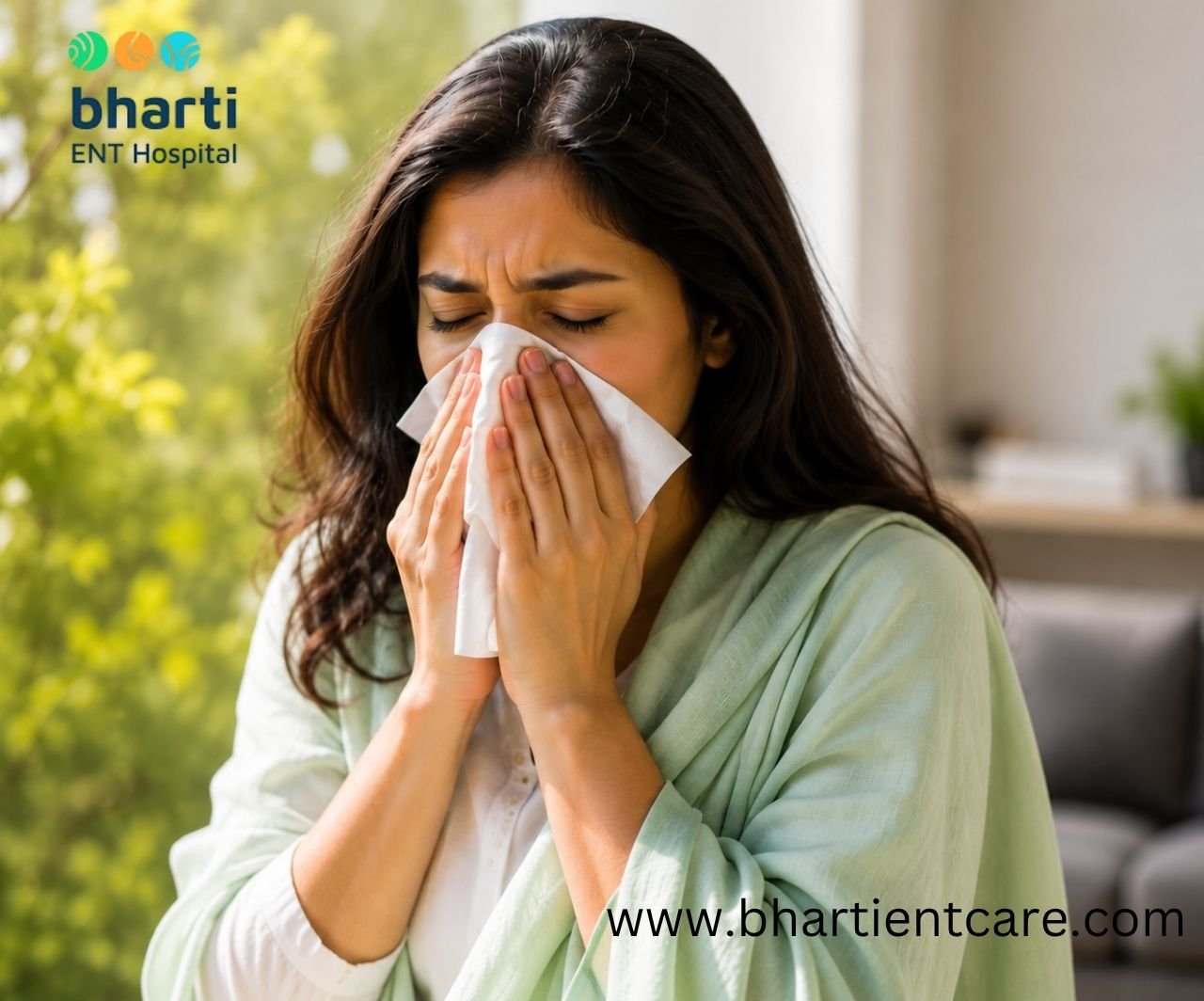
Sneezing, a running nose, itchy eyes and frequent nasal congestion are common symptoms and conditions that are overlooked as minor inconveniences during the season. But if allergies become a recurring problem every year they may impact your sleep, work productivity, concentration, and overall well-being or quality of life.
The first step to successful seasonal allergy prevention and management is to learn about seasonal allergy triggers and symptoms. At Bharti ENT Hospital, patients undergo thorough allergy testing and custom treatment plans to determine what causes the reactions and alleviate long-term symptoms.
Knowing what triggers or symptoms lead to seasonal allergies can be helpful in controlling the symptoms before they interfere with your daily routine.
What Are Seasonal Allergies?
Seasonal allergies are caused by an overactive immune response to substances that usually aren’t dangerous. These are called the allergens, which cause histamine and other inflammation-causing chemicals to be released, resulting in allergy symptoms.
Allergies are not caused by viruses or bacteria, but by a reaction of the immune system to exposure to an allergen in the environment. When it comes to allergy symptoms, many patients think they have repeated colds, but in fact it is allergies causing the symptoms.
Recently I assessed a patient who complained of “getting a cold” each spring. On review of his symptom pattern and exposure history, it was evident that the exposure to pollen was the likely cause of his symptoms and not repeated infections.
Common Seasonal Allergy Triggers Throughout the Year
Allergens are more likely to affect people during certain times of the year.
Tree Pollen in Spring
Tree pollen is a common cause of spring allergies. Common sources include:
- Neem trees
- Oak trees
- Ash trees
- Maple trees
- Eucalyptus trees
On windy days pollen can be transported far and can cause symptoms even where no trees are near.
Grass Pollen in Summer
Grasses are important allergy triggers as the weather gets warmer. Common examples include:
- Bermuda grass
- Ryegrass
- Timothy grass
People who are sensitive to grass pollen tend to have poorer reactions after being outdoors.
Weed Pollen in Late Summer and Autumn
Weed pollens can cause symptoms for many allergy patients to worsen in late summer and fall. Common triggers include:
- Ragweed
- Mugwort
- Pigweed
Mold Spores During Humid Conditions
Mold grows well in moist, humid conditions and is likely to be a bigger issue in the rainy season. Common sources include:
- Wet leaves
- Compost piles
- Damp walls
- Poorly ventilated spaces
Mold exposure can happen both inside and out, compared to pollen exposure.
Recognizing the Symptoms of Seasonal Allergies
The symptoms may differ for different individuals depending on the type of allergen and the intensity of the allergic reaction.
Nasal Symptoms
The most frequent complaints are:
- Sneezing
- Runny nose
- Nasal congestion
- Itchy nose
- Postnasal drip
If exposure continues these symptoms may last for weeks or months.
Eye Symptoms
Eyes are a common site for allergic reactions.
Patients often experience:
- Itchy eyes
- Redness
- Excessive tearing
- Swollen eyelids
Throat and Ear Symptoms
Allergies may also lead to:
- Itchy throat
- Frequent throat clearing
- Ear fullness
- Congestion causing slight hearing discomfort
Fatigue and Reduced Concentration
Allergies can have a significant effect on functioning in the everyday life of many people, especially those who underestimate the effects. If symptoms last longer than normal, they can lead to:
- Poor sleep quality
- Daytime fatigue
- Reduced concentration
- Irritability
One university student I treated was always having trouble with concentration in exam time. Once she was diagnosed with seasonal pollen allergy and treated accordingly, after which, she experienced significant improvement in her symptoms and reported an improvement in school performance.
When Seasonal Allergies Become More Serious
Some allergies are easily treated, but in some cases, untreated allergies may lead to other ENT issues.
Chronic Nasal Inflammation
If nasal inflammation is chronic, it can cause continuous nasal blockage and discomfort.
Sinus Problems
Chronic inflammation can disrupt drainage of the sinuses and make it more likely that you will have more sinus infections. For some people, if the sinus disease is very severe or chronic, it may be necessary for the condition to be seen more carefully and treated.
Nasal Polyps
Nasal polyps can be a result of chronic inflammation and can lead to breathing problems and congestion.
Impact on Quality of Life
Severe allergies can affect:
- Work productivity
- School performance
- Physical activity
- Sleep quality
- Social interactions
Early diagnosis of symptoms will help avoid these complications.
How Seasonal Allergies Are Diagnosed and Treated
Correct diagnosis is critical as allergic symptoms may be similar to those of colds, sinus problems, or respiratory infections.
Allergy Evaluation
A detailed assessment might involve:
- Symptom review
- Medical history
- Trigger identification
- Allergy testing when appropriate
Allergy-specific services may be able to help determine what the individual is reacting to in the environment and provide a customized management plan.
Nasal Allergy Treatment
The aim of a good nasal allergy treatment is to try to reduce inflammation, control symptoms and limit exposure to known allergens.
Treatment options might involve:
- Antihistamines
- Nasal sprays
- Saline rinses
- Allergen avoidance strategies
- Immunotherapy when appropriate
Managing Allergy-Related Sinus Disease
Endoscopic sinus surgery may be recommended to facilitate sinus drainage and restore normal sinus airflow in selected cases with severe sinus obstruction. In some patients, allergic reactions can play a role in chronic sinus obstruction and recurrent sinus infections.
For those patients who experience persistent sinus disease, despite medical treatments being successful, advanced sinus care services will look at structural problems, nasal polyps and other factors.
People who are thinking about getting treatment can find it helpful to understand what to expect from sinus surgery and recovery, which can help them better understand the treatment process and make a selection on their sinus health.
Practical Strategies to Reduce Allergy Exposure
While it is not always feasible to avoid exposure to seasonal allergens, there are a number of steps that can be taken to minimize exposure.
Monitor Pollen Levels: Read local pollen forecasts when pollen season is high.
Keep Windows Closed: Shutting windows in the high pollen hours reduces exposure indoors.
Shower After Outdoor Activities: To remove pollen from skin and hair, so as to minimize continuing exposure.
Use Air Filtration: Using a high efficiency air filter can help decrease indoor allergens.
Maintain Indoor Cleanliness: Regular cleaning can aid to control dust, mold, and indoor allergen accumulation. Simple habits when done constantly will make a difference in being preventative.
Taking Control of Seasonal Allergies
Seasonal allergies are more than just an inconvenience. If left unchecked, they can impact physical comfort, sleep quality, concentration and long-term ENT health.
Practical recommendations include:
- Look for patterns of symptoms.
- Get checkup if symptoms recur seasonally.
- Take treatment as directed.
- Minimize exposure to known allergens.
- Treat complications related to sinus promptly.
Maximizing Your Sinus Treatment Results
One of the best things I can teach my patients is to know what triggers they have. Once they become aware of what’s been causing their symptoms and take steps to prevent it, they can find great relief.
The allergy assessments and sinus evaluation done at Bharti ENT Hospital allow patients to gain knowledge about their allergies and get the most out of their treatment. Recognizing triggers early and receiving timely care and treatment can help minimize symptoms, enhance quality of life and maintain future lung and sinus function.
Frequently Asked Questions (FAQs)
What are some indicators that my symptoms are not allergies but a cold?
As compared to a cold, which lasts for 7-10 days and may have a fever, itching from an allergy can last for weeks.
What is the treatment plan for nasal allergy?
Treatment will be individualized and depend upon the severity of symptoms, triggers found and the patient’s needs.
When should allergy testing be done?
It is advisable to use tests if symptoms persist, recur, or fail to respond to regular treatment.
When is endoscopic sinus surgery considered?
If medical treatment is not effective enough for chronic sinus disease, nasal polyps, or structural blockages then surgery may be an option.