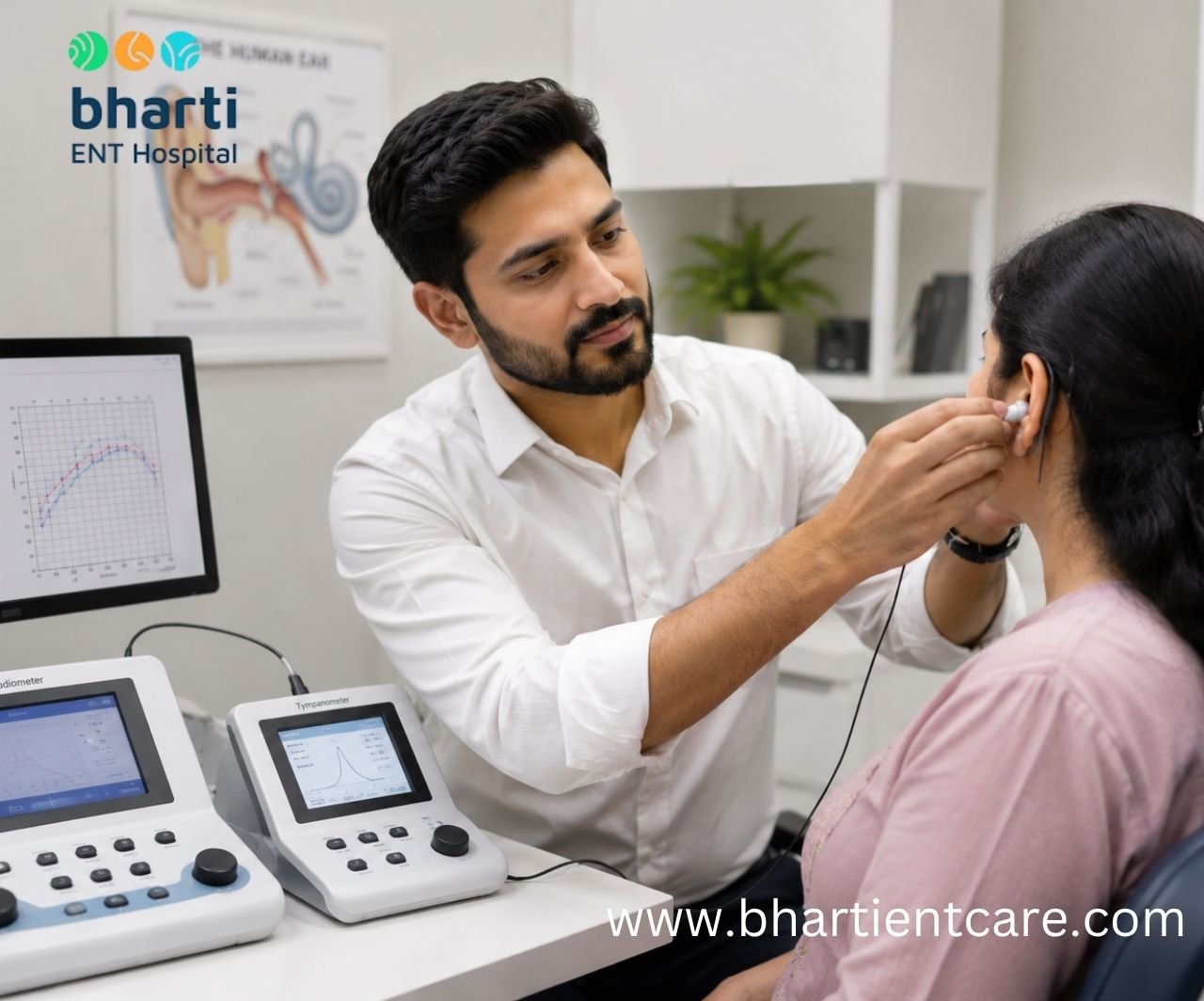
There are people who believe that they will get their hearing back right after having an auditory implant surgery, but hearing enhancement is likely a gradual process. This can cause patients and families to be worried about whether they are making progress as expected.
Recognizing hearing improvement after cochlear implant milestones can provide reassurance and help set realistic expectations. Bharti ENT Hospital provides thorough support to the patients before and after the implantation, enabling them to understand the entire process of hearing rehabilitation.
A clear understanding of sign of recovery can help you monitor recovery and celebrate positive steps in communication and life.
Understanding the Hearing Recovery Process
An auditory implant is not a hearing aid. It does not enhance sound, but instead sends the sound into healthy parts of the inner ear and directly to the auditory nerves. Many patients are surprised to find that there is a slow improvement in hearing. There’s a period required for the brain to receive new sound signals and learn to interpret them.
After cochlear implant surgery, one will undergo an activation process, programming adjustments, and auditory rehabilitation sessions that will help improve hearing life long. I always tell my patients that the first few weeks aren’t about perfect hearing. Instead, they’re focused on enabling the brain to learn how to hear sounds differently.
Early Signs Your Hearing Is Improving
Progress often begins with small but meaningful changes.
Increased Awareness of Environmental Sounds
One of the first indicators is hearing sounds that were previously not heard. Patients will often complain of hearing:
- Doorbells
- Footsteps
- Running water
- Birds chirping
- Traffic sounds
At first, these sounds may not be familiar or natural sounding, but when detected, they are a sign that the auditory system is working effectively.
Improved Response to Voices
The other good news is the improving awareness of speech. Most patients report they are able to:
- Identify if an individual is talking
- Identify different voices
- Recognize speech patterns
One of my recent patients said that the first milestone after his implant was when he heard his granddaughter calling him from another room. He didn’t understand all the words at first, but just hearing her voice was a big step forward.
Better Sound Localization
Many people get better at finding out where sounds are coming from as they begin to hear them better. This may include:
- Locating a ringing phone
- To establish the direction of approaching vehicles
- Identifying who is speaking in a room
These enhancements tend to be subtle and happen over a few weeks or months.
Communication Improvements That Indicate Progress
Though environmental awareness is crucial, communication enhancements are often meaningful signs of recovery.
Reduced Dependence on Lip Reading
Many people depend on the visual stimuli as much as any other before implantation. As your hearing improves, you might be able to do:
- Understand more spoken words
- Have more successful conversations
- Be less reliant on facial expressions
Improved Telephone Communication
People with severe hearing loss may find it difficult to understand what’s being said on the phone. As the treatment progresses, many patients will have increasing improvements in their ability to:
- Recognize familiar voices
- Understand simple conversations
- Participate in phone calls more confidently
Better Understanding in Quiet Environments
Speech recognition tends to work better initially in quiet settings and then gradually towards more complex listening environments. Some of the benefits of these gains could be:
- Following one-on-one conversations
- Understanding family members
- Being involved in daily conversations
A patient’s family dinner with her husband after a few months of rehabilitation was described as a wonderful occasion, as she could now speak without having to ask people to repeat themselves so often. This is typically the interpretation of the meaning of sounds.
Milestones That Often Occur Over Time
While each patient’s progress is unique, there are some markers that may suggest that there is continued improvement in hearing.
Recognition of Familiar Sounds
Patients will slowly begin to notice:
- Household appliances
- Alarm clocks
- Music
- Television sounds
Improved Speech Clarity
Speech will gradually get more natural over time. Many patients initially hear voices that are lifeless and robotic, but gradually become more familiar.
Greater Confidence in Social Situations
Improved hearing often contributes to:
- Bigger involvement in discussions
- Greater independence
- Improved emotional well-being
The changes can make a significant impact on the quality of life.
Better Performance During Rehabilitation Sessions
When hearing improves, listening and speaking tasks will become easier. Continued improvement during rehabilitation is generally a good sign of the implant working well and that the brain is making a good recovery.
Factors That Influence Hearing Improvement
Everyone does not grow at the same speed. The outcomes can be affected by a number of factors, such as:
Duration of Hearing Loss: People who are treated early can usually cope better than those who have suffered from severe hearing loss for many years.
Consistent Device Use: Wearing the device regularly helps the brain learn to interpret sounds more efficiently.
Participation in Rehabilitation: Through listening exercises and auditory training, effective recovery is still vital.
Age and Individual Differences: Each patient will have their own experiences, health factors, and neurological adaptations in the rehabilitation process. Ongoing evaluation, programming, and rehabilitation are often part of comprehensive implant programs, helping patients to maximize their benefits.
The four phases of modern cochlear implant services, pre-operative, surgical, activation, and long-term auditory rehabilitation, all play a role in ensuring successful hearing outcomes.
Hearing rehabilitation patients may also wish to know practical strategies for living with hearing loss, such as tips for communication, socialization and long-term hearing support.
When to Discuss Concerns With Your Specialist
Patients should be open with their hearing health care team if they have concerns, including:
- Persistent discomfort
- Lack of noticeable progress
- Device-related issues
- Failure to take part in rehabilitation
Specialists can tune programming and track progress with regular follow-up appointments.
Numerous patients feel like giving up when they compare themselves to others. In fact, recovery from hearing loss is different for each person. Progress should always be measured in terms of personal targets and objectives, and not in terms of others’ time.
Practical Ways to Support Your Recovery
Several measures to maximize hearing after implantation can be taken by the patient:
- Use the device regularly
- Go to all follow-up visits
- Be actively involved in rehabilitation sessions
- Practice listening in various settings
- Communicate openly with family and caregivers
- Appreciate progress, no matter how small
Why Rehabilitation Assistance Matters
A helpful tip I always give people is that they should take a hearing journal. Patients can feel a sense of achievement when recording new sounds, better conversations and personal milestones, which may not be noticed in other ways.
After auditory implantation at Bharti ENT Hospital, the patients enjoy comprehensive care for the implant, rehabilitation assistance, and follow-up support which assures meaningful hearing outcomes for the patients. If you are healing from a cochlear implant surgery or you want to know what to expect from the best ENT Hospital in Vadodara, it’s good to be knowledgeable about the signs of hearing improvement to stay motivated and confident on your cochlear implant journey.
Frequently Asked Questions (FAQs)
What is the timeframe for improvement of hearing following an implant?
Some patients will have some awareness of sound within days of activation, others will see a gradual improvement over the course of several weeks or months.
Is it normal for sounds to seem unusual at first?
Yes. Sounds are often initially described as mechanical or unrecognizable until the brain learns to interpret them.
What are the factors that influence the results of hearing after implantation?
These factors include duration of the hearing loss, age, consistency of device use, participation in rehabilitation, and general health.
How often does a program need to be adjusted after implantation?
There are a few changes that are typically made in the first months due to the change in hearing response and improvement.