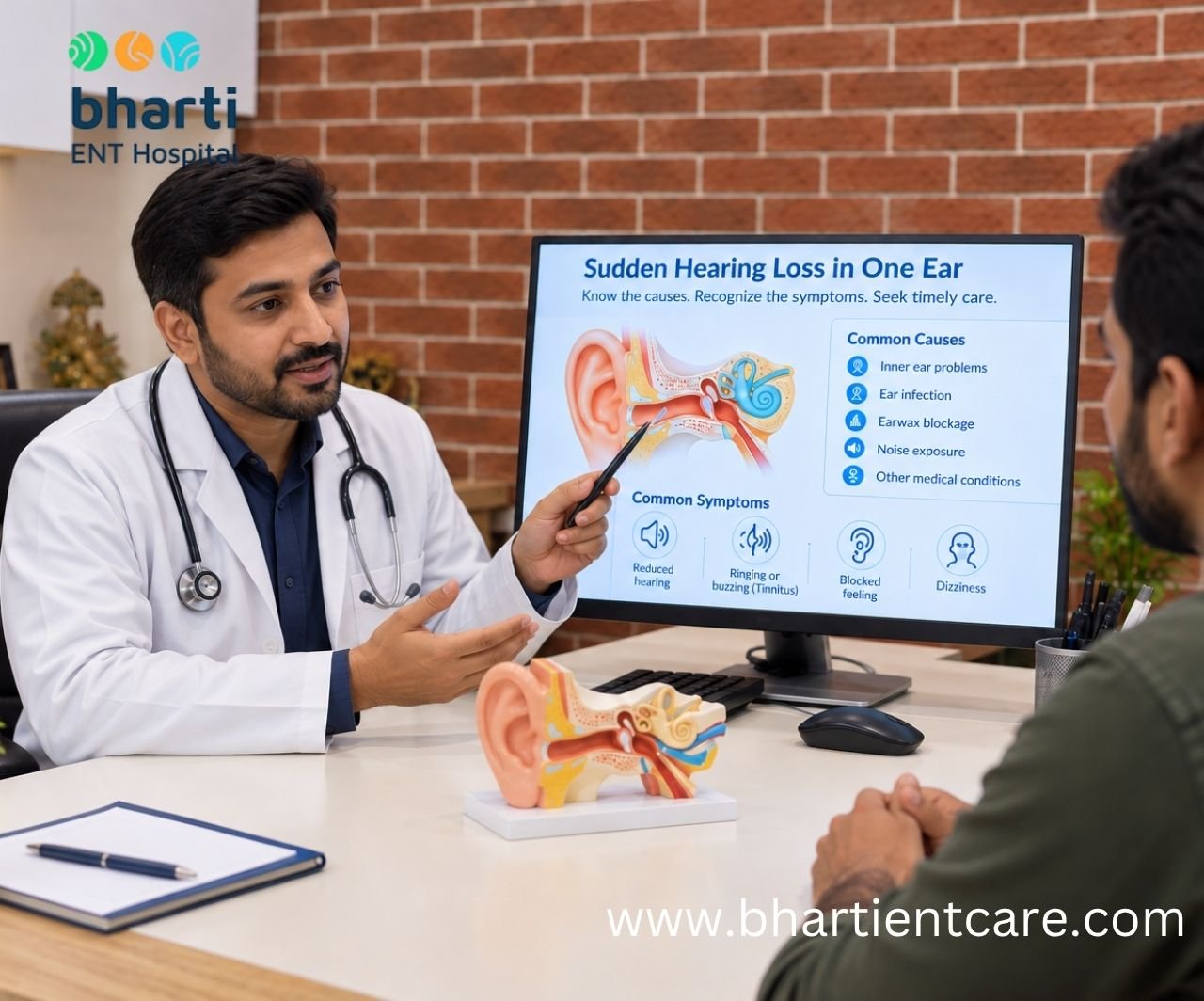
Sudden hearing loss in one ear can be a concerning experience. You might notice that sounds suddenly become muffled, conversations seem unclear, or a ringing sensation develops in your ear. Sometimes, it may feel as though your ear is blocked, even when there is no obvious blockage.
Although earwax buildup, infections, and other conditions can cause hearing difficulties, sudden hearing loss can also be a medical emergency, particularly when it involves the inner ear.
Recognising the symptoms, understanding the possible causes, and seeking timely medical attention are important steps towards protecting your hearing.
In this article, we explore sudden sensorineural hearing loss, its symptoms and causes, available treatment options, and when to consult an ENT specialist in Vadodara.
What Is Sudden Hearing Loss in One Ear?
Sudden hearing loss refers to a rapid reduction in hearing ability that develops over a short period, typically within 72 hours.
It may affect one or both ears, but sudden hearing loss in one ear is a common presentation of a condition called sudden sensorineural hearing loss (SSNHL).
People may notice the change when they wake up, use a telephone, listen to someone speaking, or discover that sounds seem different between their ears.
The hearing reduction may be mild, moderate, severe, or profound. Some people experience partial hearing loss, while others may lose most or all of their hearing in the affected ear.
Sudden hearing loss should not automatically be attributed to earwax or congestion. An examination is necessary to determine whether the problem involves the outer ear, middle ear, inner ear, or auditory pathway.
According to the National Institute for Health and Care Excellence (NICE), unexplained sudden hearing loss that develops over three days or less and occurs within the previous 30 days requires immediate specialist assessment, with the person being seen within 24 hours.
What Is Sudden Sensorineural Hearing Loss (SSNHL)?
Sudden sensorineural hearing loss is a rapid reduction in hearing caused by a problem involving the inner ear or the neural pathways responsible for transmitting sound information to the brain.
The inner ear contains delicate sensory structures that convert sound vibrations into electrical signals. When these structures or the auditory pathway are affected, the brain may not receive sound information normally.
SSNHL often affects one ear and may develop without an identifiable cause. In such cases, it is described as idiopathic sudden sensorineural hearing loss.
The condition may occur with tinnitus, a feeling of fullness in the ear, or dizziness. Importantly, it can develop without ear pain.
Why does this matter?
SSNHL may initially feel similar to a blocked ear. However, unlike some causes of temporary conductive hearing loss, it can result in permanent hearing impairment if not appropriately assessed and managed.
This is why sudden, unexplained hearing changes require urgent medical evaluation rather than a wait-and-see approach.
What Are the Symptoms of Sudden Hearing Loss?
The symptoms of sudden hearing loss can vary depending on its cause and severity.
Some people experience a noticeable reduction in hearing, while others initially recognise only subtle changes.
1. Sudden Reduction in Hearing
You may suddenly find that sounds are quieter or less distinct in one ear.
For example, you might struggle to hear someone speaking beside you or notice a difference when using a telephone.
2. Muffled or Distorted Sounds
Voices may sound unclear, distorted, or unusually distant.
Even when you can hear someone speaking, understanding their words may become difficult.
3. Ringing or Buzzing in the Ear
Tinnitus is the perception of sound without an external source.
It may be experienced as ringing, buzzing, hissing, or another persistent or intermittent sound.
Tinnitus can occur alongside sudden hearing loss, although it does not always indicate SSNHL.
4. A Blocked or Full Sensation
Some people describe the affected ear as feeling plugged, congested, or full.
This sensation can occur even when there is no earwax blockage.
5. Dizziness or Vertigo
Certain inner-ear conditions can affect both hearing and balance.
You may experience dizziness, a spinning sensation, or difficulty maintaining your balance.
6. Difficulty Following Conversations
You may find it harder to understand speech, particularly in noisy environments or when someone speaks from the affected side.
These symptoms can have different causes. Their presence alone cannot confirm sudden sensorineural hearing loss, which is why clinical assessment and hearing tests are important.
What Causes Sudden Hearing Loss in One Ear?
There is no single cause of sudden hearing loss. The underlying problem may involve the outer ear, middle ear, inner ear, or auditory pathway.
Understanding these possibilities helps explain why different patients may require different treatments.
1. Sudden Sensorineural Hearing Loss
SSNHL occurs when sound processing is affected within the inner ear or auditory pathway.
In many cases, the exact cause remains unknown.
Possible associated factors include:
- Viral or other infections.
- Autoimmune conditions.
- Certain medications that can damage hearing.
- Head injuries.
- Disorders affecting the inner ear.
- Problems involving the auditory nerve or related structures.
Because some causes may require time-sensitive treatment, unexplained sudden hearing loss should be evaluated promptly.
2. Earwax Blockage
Earwax protects the ear canal, but excessive accumulation can sometimes obstruct sound transmission.
A blockage may cause muffled hearing, a sensation of fullness, or discomfort.
Earwax-related hearing loss is generally a conductive problem, meaning sound is not travelling efficiently through the outer or middle ear.
However, assuming that sudden hearing loss is simply caused by wax can delay the diagnosis of an inner-ear condition.
An examination can help determine whether wax is present and whether it adequately explains the symptoms.
3. Middle Ear Infections and Fluid
Infections or fluid accumulation in the middle ear can interfere with sound transmission.
Depending on the condition, symptoms may include:
- Ear pain.
- A feeling of pressure.
- Reduced hearing.
- Ear discharge.
- Fever in some cases.
The appropriate treatment depends on the underlying problem. Not every ear infection requires antibiotics, and treatment should be based on clinical findings.
4. Exposure to Loud Noise
Very loud sounds, including explosions or intense occupational or recreational noise, can damage sensitive structures in the inner ear.
Noise-related hearing loss may develop suddenly and may be accompanied by tinnitus.
Reducing exposure to harmful noise and using appropriate hearing protection can help lower the risk of noise-induced hearing damage.
5. Inner Ear Disorders
Certain inner-ear conditions can affect hearing and balance.
For example, Ménière’s disease may involve episodes of vertigo, fluctuating hearing loss, tinnitus, and a sensation of fullness in the affected ear.
Other inner-ear disorders may produce overlapping symptoms, so a specialist assessment is necessary to distinguish between them.
6. Head or Ear Injuries
An injury involving the head or ear can damage structures responsible for hearing.
Sudden hearing changes following an accident, head injury, or significant pressure-related event should be assessed urgently.
The urgency and type of evaluation will depend on the injury and associated symptoms.
Why Should You Never Ignore Sudden Deafness in One Ear?
Sudden deafness in one ear is not always permanent, but it should never be dismissed without investigation.
One major concern is sudden sensorineural hearing loss, which can develop quickly and may not cause pain.
Waiting for the symptoms to disappear can delay diagnosis and treatment.
Warning Signs That Require Immediate Attention
Seek urgent medical assessment if you experience:
- Sudden hearing loss in one or both ears.
- A sudden reduction in hearing accompanied by ringing or buzzing.
- Sudden hearing loss with dizziness or vertigo.
- Rapidly developing hearing difficulties without an obvious explanation.
If sudden hearing loss occurs alongside facial weakness, facial numbness, difficulty speaking, or other possible stroke symptoms, seek emergency medical care immediately.
The key point is that the absence of pain does not mean the condition is harmless.
How Is Sudden Hearing Loss Diagnosed?
An ENT specialist may recommend several investigations to identify the type and possible cause of hearing loss.
The diagnostic process generally begins with a medical history and examination.
1. Medical History and Ear Examination
The doctor may ask:
- When did the hearing loss begin?
- Did it develop suddenly or gradually?
- Is one ear or are both ears affected?
- Are you experiencing tinnitus, dizziness, pain, or discharge?
- Have you recently experienced an infection, injury, or exposure to loud noise?
- Are you taking any medications that could affect hearing?
The doctor will also examine the ear canal and eardrum to identify visible problems such as wax blockage or infection.
2. Pure-Tone Audiometry
Pure-tone audiometry is a hearing test that measures the quietest sounds a person can hear at different frequencies.
The results help determine the degree and pattern of hearing loss.
Audiometry also helps distinguish between conductive hearing loss and sensorineural hearing loss.
This distinction is important because the two types can have different causes and treatment approaches.
3. Additional Diagnostic Tests
Depending on the examination and hearing-test results, further investigations may be recommended.
These can include:
- Tympanometry to assess middle-ear function.
- MRI to investigate selected cases of sensorineural hearing loss.
- Blood tests when a specific underlying condition is suspected.
- Additional balance or vestibular assessments when dizziness is present.
Not every patient requires every investigation. The doctor selects tests based on the individual’s symptoms and clinical findings.
Sudden Hearing Loss Treatment: What Are the Available Options?
The treatment for sudden hearing loss depends on its cause, the severity of the hearing impairment, and the results of diagnostic testing.
No single treatment fits every patient.
1. Corticosteroids for Sudden Sensorineural Hearing Loss
Corticosteroids are commonly considered for idiopathic sudden sensorineural hearing loss because they may help reduce inflammation and support hearing recovery in selected patients.
They may be administered orally or injected into the middle ear, known as intratympanic steroid treatment.
The decision depends on factors such as the patient’s medical history, the timing of presentation, and the specialist’s assessment.
Potential advantages:
- They are an established treatment option for selected cases of SSNHL.
- Different administration routes may be considered depending on the patient’s circumstances.
Limitations and considerations:
- They are not appropriate for every type of hearing loss.
- Corticosteroids can cause side effects and require medical supervision.
- Treatment does not guarantee complete hearing recovery.
2. Oral Steroids
Oral corticosteroids are taken by mouth.
They may be considered as an initial treatment option for selected patients with SSNHL.
However, the doctor must assess potential risks, particularly in people with conditions that may be affected by corticosteroids.
Patients should not take leftover steroids or begin treatment without medical advice.
3. Intratympanic Steroid Injections
Intratympanic treatment involves delivering medication into the middle ear through the eardrum.
This approach may be considered in selected cases, including situations where oral steroids are unsuitable or when additional treatment is being discussed.
Potential advantages:
- Medication is delivered locally to the middle ear.
- It may be an option for patients who cannot take systemic corticosteroids.
Limitations and considerations:
- It requires a medical procedure.
- Temporary discomfort, dizziness, or other procedure-related effects may occur.
- It is not suitable for every patient.
The choice between oral steroids, intratympanic injections, or other approaches should be made with an ENT specialist after reviewing the clinical findings.
4. Treatment for Earwax Blockage or Infection
If the hearing loss is caused by earwax blockage, a healthcare professional may recommend appropriate wax removal.
If an infection is identified, treatment will depend on its location, severity, and cause.
For example, some infections may require medication, while others may improve with supportive care.
These treatments address the underlying cause rather than treating SSNHL itself.
5. Hearing Rehabilitation
Some patients continue to experience hearing difficulties despite medical treatment.
Depending on the degree and type of hearing loss, rehabilitation may include:
- Hearing aids.
- Communication strategies.
- Assistive listening devices.
- Additional specialist assessment.
- Other hearing rehabilitation options for selected cases.
Hearing rehabilitation can help improve communication and daily functioning, but it does not replace urgent evaluation when hearing loss develops suddenly.
Oral Steroids vs. Intratympanic Steroids: Understanding the Differences
| Factor | Oral steroids | Intratympanic steroid injections |
| Administration | Taken by mouth | Medication delivered into the middle ear |
| Treatment approach | Systemic medication | Local medication delivery |
| Potential benefit | May be considered as an initial treatment | May be considered when oral treatment is unsuitable or as part of further treatment |
| Main considerations | Systemic side effects and individual medical risks | Requires a procedure and may cause temporary discomfort or dizziness |
| Suitability | Depends on medical history and clinical assessment | Depends on clinical findings, patient circumstances, and specialist advice |
Neither option is automatically appropriate for every patient.
The evidence and recommendations regarding the preferred route of steroid administration are not definitive for every clinical situation. A specialist should discuss the expected benefits, risks, and alternatives with the patient.
Can Hearing Return After Sudden Hearing Loss?
Hearing recovery varies considerably between individuals.
Some people experience substantial improvement, while others have partial recovery or persistent hearing loss.
The outcome may depend on several factors, including:
- The underlying cause.
- The severity of hearing loss.
- The timing of medical assessment and treatment.
- The individual’s response to treatment.
- Other medical conditions.
It is not possible to predict an individual’s recovery based on symptoms alone.
This is another reason why prompt diagnosis and appropriate follow-up are important.
How Can You Reduce the Risk of Hearing Damage?
Not every case of sudden hearing loss can be prevented. However, protecting your ears and responding promptly to symptoms can help reduce avoidable risks.
Consider the following precautions:
- Avoid prolonged exposure to excessively loud sounds.
- Use suitable hearing protection in noisy environments.
- Keep the volume of personal listening devices at a reasonable level.
- Avoid inserting cotton buds or other objects deep into the ear canal.
- Seek medical advice if you notice sudden or unexplained hearing changes.
- Follow your specialist’s recommendations for treatment and follow-up.
Avoid attempting to treat sudden hearing loss with unprescribed ear drops, home remedies, or self-administered medication.
When Should You Consult an ENT Specialist in Vadodara?
If you experience sudden hearing loss in one or both ears, seek immediate medical assessment.
Do not wait several days to see whether your hearing improves on its own.
For unexplained sudden hearing loss that develops over three days or less within the previous 30 days.
If you are looking for hearing loss treatment in Vadodara, an ENT specialist can assess your symptoms, arrange appropriate hearing tests, and determine whether further investigations or treatment are required.
Frequently Asked Questions
Why did I suddenly lose hearing in one ear?
Sudden hearing loss can result from several causes, including earwax blockage, middle-ear problems, noise exposure, and sudden sensorineural hearing loss. An examination and hearing test are needed to determine the cause.
Is sudden hearing loss in one ear a medical emergency?
Unexplained sudden hearing loss can be a medical emergency. NICE recommends immediate specialist assessment within 24 hours for adults whose hearing loss developed over three days or less within the previous 30 days.
Can sudden hearing loss be treated?
Yes, some causes of sudden hearing loss are treatable. Treatment depends on the underlying condition. Corticosteroids may be considered for selected patients with sudden sensorineural hearing loss, while earwax blockage and infections require different approaches.
Can earwax cause sudden hearing loss?
Yes. Earwax can obstruct the ear canal and reduce hearing. However, sudden hearing loss should not automatically be attributed to wax without an examination, because inner-ear conditions can produce similar symptoms.
Does sudden hearing loss always cause ear pain?
No. Sudden sensorineural hearing loss can occur without ear pain. A person may instead notice muffled hearing, tinnitus, or a blocked sensation.
When should I see an ENT specialist for sudden hearing loss?
Seek immediate medical assessment if hearing loss develops suddenly, particularly when the cause is unclear. Do not wait for symptoms to become severe before seeking help.
Conclusion
Sudden silence in one ear can be caused by several conditions, ranging from earwax blockage to sudden sensorineural hearing loss.
Although some causes are relatively straightforward to treat, others may require urgent medical investigation and time-sensitive treatment.
The most important step is to take sudden hearing changes seriously and seek medical assessment without delay. Early evaluation can help identify the underlying cause, guide treatment decisions, and support appropriate hearing care.
If you notice a sudden reduction in hearing, ringing in your ear, or an unexplained blocked sensation accompanied by hearing changes, consult an ENT specialist or seek urgent medical care.