
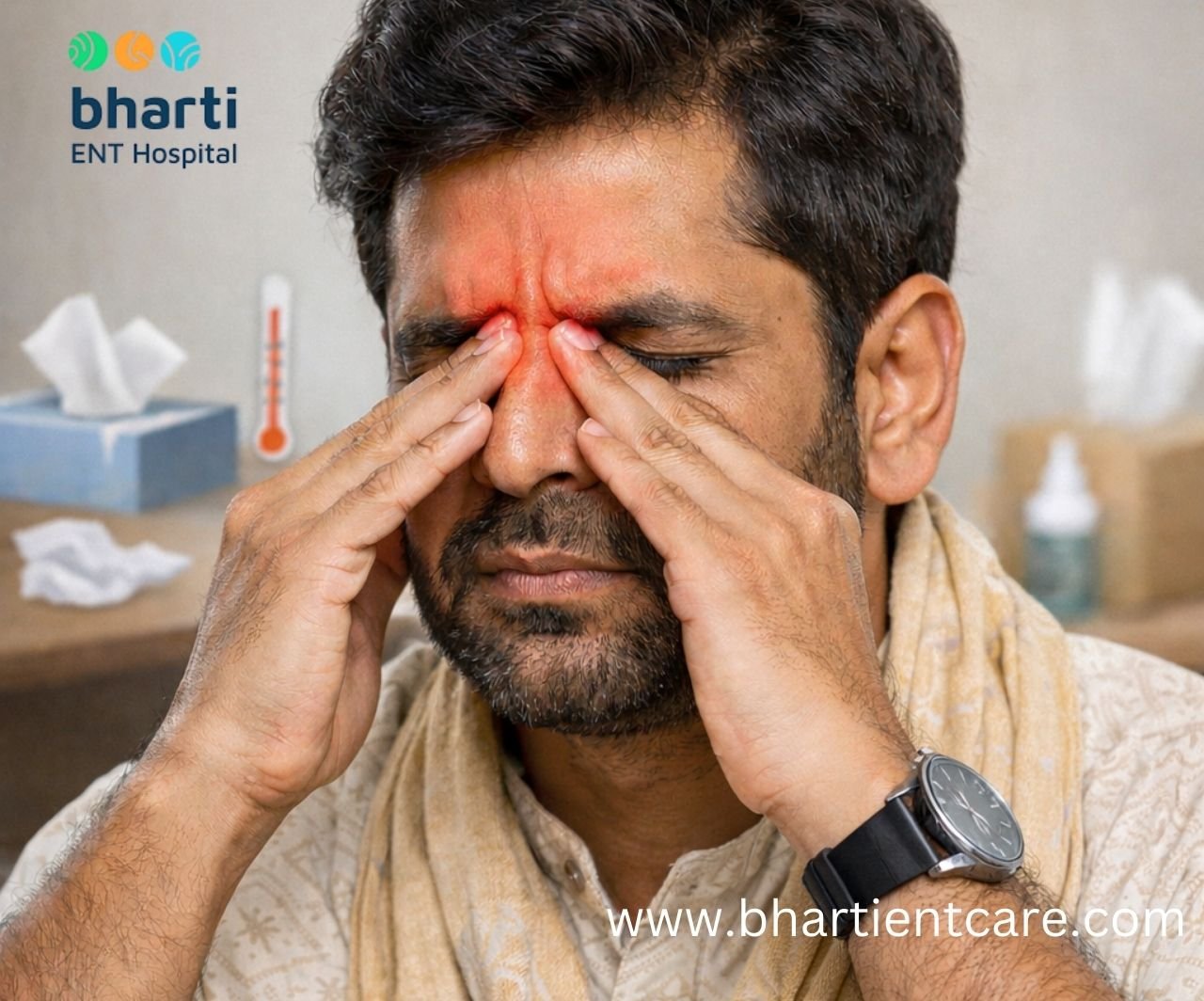
Millions of people all over the world have sinus problems which interfere with everyday life causing constant discomfort, difficulty breathing and feel pressure on the face. At Bharti ENT Hospital, we often deal with patients whose productivity, quality of sleep, and well-being are impaired by the untreated sinus conditions. Knowledge of what is sinusitis is the initial step towards early treatment and permanent relief.
Sinusitis disease arises when the air-filled cavities surrounding the nose are inflamed or infected causing blocked drainage and the build-up of mucus. On the one hand, most of the cases start with a simple cold, but unattended inflammation may develop into serious issues and necessitating medical attention. Early detection of symptoms, finding triggers, and selecting an appropriate treatment may help to avoid chronic pain and recover normal breathing.
What is Sinusitis?
The hollows in the skull are called sinuses that help to humidify air, enhance voice resonance, and decrease the weight of the skull. These are passages lined by mucous membranes that keep producing fluid in order to entrap dust and microbes. The obstruction in drainage pathways causes mucus to build up, which becomes a perfect place for infection.
What Happens in Sinusitis
- The lining of the sinuses swells up with infection or irritation
- Narrow drainage openings become clogged, preventing the mucus from flowing out
- The pressure accumulates in the cavities, which makes it painful and heavy
- Microorganisms grow in trapped mucus
Inflammation can be either in the case of short-term infection or chronic disease, depending on its duration and severity. Signs of sinusitis, which include nasal congestion and pain around the face, are early symptoms of sinusitis that many patients experience and postpone treatment until the symptoms become too severe. The chronic sinusitis symptoms are persistent cases that result in persistent blockage, loss of smell, and fatigue, whereas sudden infections cause acute sinusitis symptoms, such as fever, thick discharge, and severe pain.
Symptoms of Sinusitis
The symptoms are different depending on the cause, the duration and the immune response of the individual. There are patients who complain of mild congestion and those who complain of debilitating pain and pressure.
Typical manifestations are:
- Blocked nose or inability to breathe through the nose
- Thick yellow-green nasal discharge
- Pain in the face, particularly in the cheeks, eyes, or forehead
- Impaired smell or taste
- Throat irritation due to post-nasal drip
- Weakness and lack of concentration
One of the hallmark complaints is the sinus headache, which is characterized by deep pressure and begins to aggravate when one bends forward. Stagnant mucus can also lead to ear fullness, dental pain, or bad breath, which is reported by many patients.
Causes of Sinusitis
Several causes can irritate the sinus linings and obstruct drainage routes. This knowledge of the causes of sinusitis prevents relapses and aids in proper treatment.
What Causes Sinusitis
- Viral follow-up infections after a common cold
- Swelling due to allergic reactions
- Structural disorders such as a deviated septum
- Nasal polyps or growths
- Exposure to pollutants or irritants
These factors lead to different sinus infection causes, such as sinusitis due to cold, where the inflammation caused by the virus spreads to the sinuses. Sinus blockage causes are common in allergic individuals due to mucosal swelling, whereas in immunocompromised patients, they may become seriously infected.
It can be caused by different microorganisms as well:
- A bacterial sinus infection is caused by the growth of bacteria in stagnant mucus
- Viral sinusitis commonly occurs after respiratory infections
- Individuals with compromised immunity may have fungal sinusitis
Sinus infection due to allergy can occur, especially when exposed to pollen during the season.
When to See a Doctor for Sinusitis
Usually, the mild symptoms can be cured in a week but persistent or severe cases need medical care. Knowing when to visit a doctor for sinusitis can help avoid complications and chronic illness.
Sinusitis Warning Signs
Consult a professional when you have:
- Symptoms that persist beyond 10 days with no improvement
- High fever or intense facial pain
- Puffy under the eyes or vision changes
- Frequent year-round infections
- Thick discharge with foul smell
Unattended inflammation can cause severe sinus infection complications, such as the spread of inflammation to the eyes, brain, or bones. Consultation at an early stage establishes proper diagnosis and therapy.
Sinusitis Treatment Options
The management relies on the underlying cause, severity, and duration of symptoms. The treatment is directed to decrease inflammation, reestablish drainage, and eliminate infection.
Non-Surgical Relief Measures
Earlier treatment typically includes medications and supportive treatment:
- Decongestants to decrease swelling
- Antihistamines in response to allergic triggers
- Painkillers to reduce pain
- Sinus nasal irrigation to remove mucus
- Antibiotics are used in the case of bacterial infection
Such practices are the basis of sinus infection treatment, especially for mild and moderate cases. The targeted acute sinusitis treatment can be prescribed by doctors to clear short-term infections quickly.
Advanced Medical Management
Recurrent or chronic conditions demand intensive care. Imaging radiography, including CT scans, assists in diagnosing structural issues or chronic inflammation. The possibility of long-term therapy includes corticosteroid sprays, allergy treatment, or immunotherapy.
Surgical Intervention
In case of non-response to medications, the doctor can suggest the least invasive procedures to open blocked sinuses. In extreme cases, chronic sinusitis surgery might be required, which aims at clearing the obstructions and restoring the normal drainage. Innovative procedures are more precise and quicker to heal and are also known as sinusitis treatment surgery.
Why Choose Bharti ENT Hospital
The selection of the appropriate medical center is one of the factors with great impact on the success of the treatment and its long-term outcomes. We provide a combination of the latest diagnostic tools and skilled ENT practitioners at Bharti ENT Hospital to deliver comprehensive care to sinus disorders.
Our approach emphasizes:
- Proper diagnosis of underlying causes
- Individualized patient treatment plan
- Less intrusive methods for accelerating recovery
- Infection control and patient safety measures
- Follow-up to avoid relapse
Our mission is to focus on the comfort of the patient and achieve clinical excellence that will allow people to breathe clearly and sleep well, and lead a better life. Early detection of symptoms, awareness of triggers, and professional treatment will help avoid prolonged pain, and a normal life will be resumed.
Frequently Asked Questions (FAQs)
What diagnostic services are available at Bharti ENT Hospital?
Complete ENT examination, audiometry, imaging, allergy, and vestibular testing are available.
What are the nose conditions that are treated at the Bharti ENT Hospital?
Treatments include sinusitis, deviated septum, nasal obstruction, allergy-related symptoms, and nasal polyps.
Is sinusitis contagious?
Sinusitis is not infectious, but the viral infections that cause sinusitis may be transmitted between people. Transmission can be reduced with proper hygiene.
How long does sinusitis last?
Acute cases tend to heal in 7-10 days and chronic ones may last months without intervention.
Can sinusitis heal on its own?
Mild cases of the virus will tend to improve with rest and hydration. Constant or intense symptoms demand attention from the doctor.
Is sinusitis dangerous?
The majority of the cases are not life-threatening; however, untreated infections might cause serious complications involving nearby organs.
How to prevent sinusitis?
It is important to avoid allergens, practice nasal hygiene, remain hydrated, and treat colds, especially in the early stages, in order to mitigate the risk.
Does stress cause sinusitis?
Stress, itself, does not cause the infection but impairs immunity, and people become more vulnerable to respiratory diseases.