
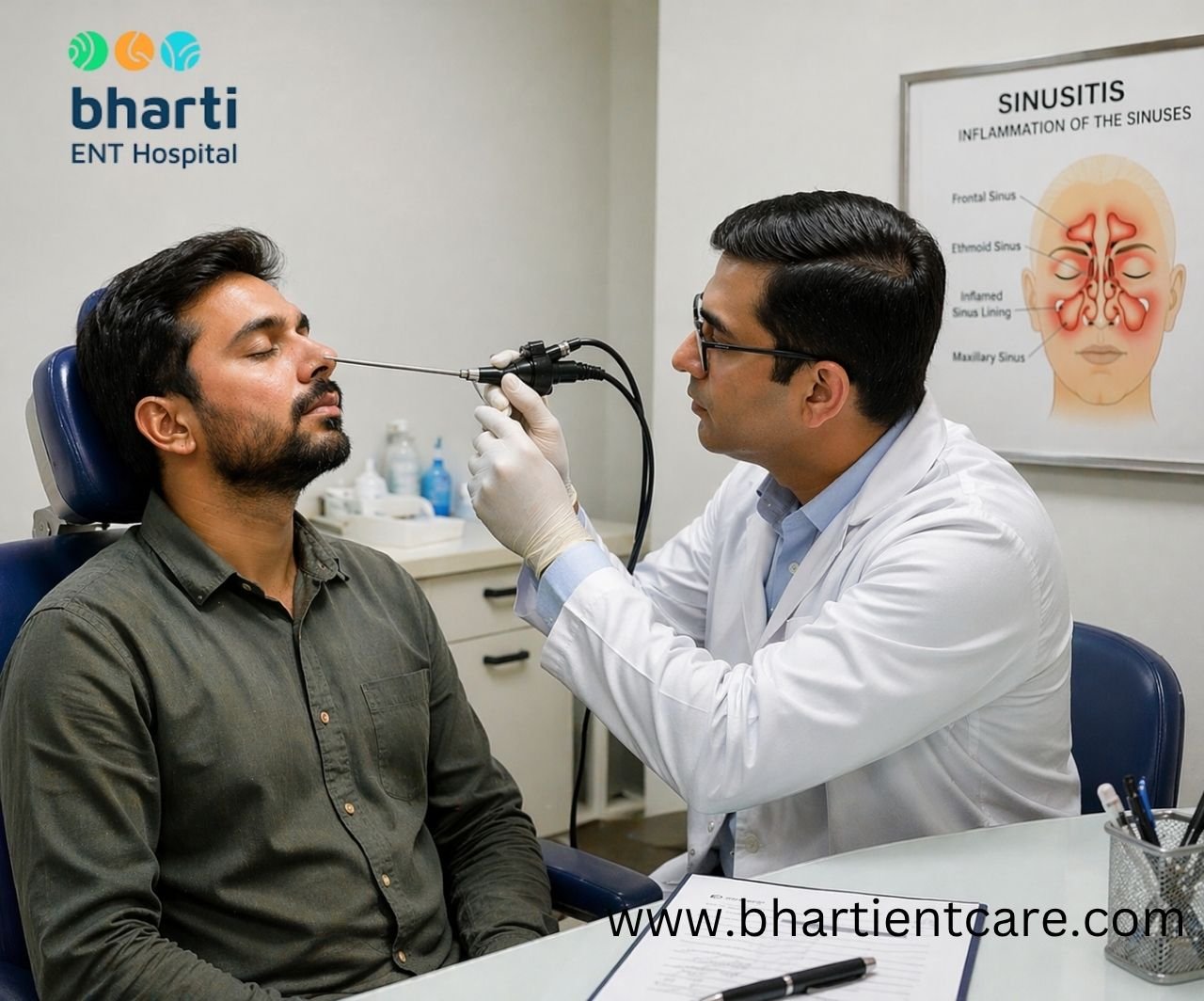
In Bharti ENT Hospital, the common complaints of patients involve constant nasal congestion, headaches, and facial pressure, along with breathing discomfort, which are commonly associated with sinus disorders. The mentioned issues might appear to be insignificant at first, but untreated sinus conditions will slowly disrupt everyday life, sleep patterns, and well-being. An accurate and early diagnosis will be necessary to know the underlying cause and decide the best treatment plan.
The sinuses are cavities filled with air which are situated in the face bones and skull bones. They are mainly involved in the production of mucus that assists in the trapping of dust, pathogens, and allergens. The inflammation or obstruction of these cavities results in sinusitis, which may be acute or chronic. The American Academy of Otolaryngology estimates that sinusitis affects approximately 1 in 8 adults annually.
Diagnosis is not simply about ascertaining the presence of sinusitis but the severity, underlying triggers, and structural abnormalities in the event of their existence. Infections, environmental irritants and allergies are some of the factors that contribute to sinus issues.
The systematic diagnostic methodology will provide a focused treatment as opposed to symptomatic treatment. In the absence of an adequate assessment, patients can become dependent on temporary pain relieving procedures that are not aimed at correcting the underlying issue, resulting in the reoccurring pain and complications.
Recognizing Symptoms and Clinical Evaluation
The initial stage of sinus diagnosis is the identification of the symptoms and a comprehensive clinical assessment. In most instances, the diagnosis of nasal allergy treatment becomes part of the diagnostic process. Patients can have a mix of nasal congestion, facial pain, loss of smell, post-nasal drip and fatigue. These symptoms are similar to common colds or allergies and it is important to have them assessed by professionals.
The first appointment is when the specialist examines the medical history of the patient and the duration and frequency of symptoms. Chronic sinusitis is normally diagnosed when the symptoms persist over 12 weeks, whereas acute cases are relatively short. Lifestyle factors, allergen exposure and past infections are also taken into consideration.
Physical exam consists of checking the passages in the nose with a light source or special equipment. The physician can rub on the facial areas to detect tenderness or swelling in the parts of the sinus. This will assist in identifying the presence of inflammation or blockage.
In most cases, it is important to differentiate between sinusitis and allergic rhinitis. A different approach to treatment is needed as allergies usually cause similar symptoms. Proper distinction is a way of making sure that patients get the right treatment and not a generic treatment.
Clinical evaluation lays the groundwork for further diagnostic steps. It offers useful information which informs of the necessity of advanced imaging or procedures so that the diagnosis made is accurate and comprehensive.
Advanced Diagnostic Tools and Imaging Techniques
In cases where the symptoms are prolonged or the preliminary assessments suggest complexity, high-end diagnostic instruments are adopted to have a better insight into the situation. The tools allow visualizing the sinus structures in detail and detecting the abnormalities that cannot be detected immediately in a basic examination.
One of the most commonly used techniques is nasal endoscopy. It is a procedure that requires a camera to be placed in the sinuses of the nose using a long, narrow tube that is flexible. It enables the expert to identify inflammation, polyps, infection or structural problems like a deviated septum.
The use of imaging studies, especially CT, is crucial in the diagnosis of sinus. A CT scan gives cross-sectional pictures of the sinuses showing blockages, fluid build-up and variations in anatomy. These lessons are essential when thinking about surgical intervention or assessing chronic conditions.
The diagnostic tools are not only used to establish the presence of sinus disease but also assist in deciding the severity and the extent of the disease. The information will be necessary to develop an individualized treatment plan that is focused on both symptoms and the underlying causes.
Step-by-Step Diagnostic Process Explained
Sinus diagnosis is systematic and organized in order to be accurate and efficient. The steps are cumulative and form a detailed comprehension of the state of the patient.
The procedure starts with the assessment of symptoms and review of the medical history. This assists in finding patterns and possible triggers. This is followed by physical examination to identify apparent inflammation or obstruction.
In case of the necessity of additional examination, nasal endoscopy is done to get a clear picture of the sinus passages. This is especially helpful in the discovery of polyps or latent infections. This is possibly followed by imaging tests including CT scans, which give a more in-depth insight into structural problems.
Additional tests (allergy tests or cultures) can be performed in certain situations to ascertain the existence of infections or allergic reactions. The tests aid in refining the diagnosis and in making decisions about the treatment.
Surgical procedures such as endoscopic sinus surgery can be prescribed when conservative treatments have failed or structural abnormalities have been detected. This is done to eliminate obstructions and recreate normal sinus functioning of the body in a minimally invasive procedure.
This process will be done step by step so that no part of the condition is missed and therefore successful and long lasting treatment results are achieved.
Treatment Planning Based on Diagnosis
After proper diagnosis, the second step is to have a treatment plan according to the particular condition of the patient. The treatment will depend on the cause and severity of the sinus problem.
For mild cases, medications such as decongestants, nasal sprays, and antibiotics may be prescribed. These assist in decreasing swelling, cleaning up infections and usual sinus drainage. Management of allergy is also a relevant aspect, especially in patients whose symptoms are caused by environmental factors.
In more serious or chronic situations surgical operation might be required. Minimally invasive procedures are meant to clear blocked sinus passages, obstructions, and enhance airflow. These procedures are usually non-invasive and provide permanent relief to patients who are unresponsive to medication.
Aftercare is also crucial. The patients are prescribed lifestyle changes, hygiene and follow-up visits to ensure permanent improvement. Frequent observation can be used to avoid recurrence, and it maintains sinus health.
A properly designed treatment strategy not only relieves the symptoms but also treats the cause of the situation. Such an all-encompassing style guarantees the enhancement of results and quality of life.
Knowledge of the connection between sinus health and sleep assists patients in making effective treatment choices.
Patient-Centered Sinus Solutions
At Bharti ENT Hospital, the diagnosis of sinus is carried out in a precise manner, with expertise and a patient-oriented attitude. The clue to the successful treatment and long-term relief is the knowledge of the underlying cause of sinus problems. Patients can experience better breathing, improve their sleep, and have better overall wellness with advanced diagnostic tools, structured assessment, and individualized care.
Frequently Asked Questions (FAQs)
Which services are covered in sinus treatment at Bharti ENT Hospital?
Diagnosis, medication, allergy management, and surgical options are included.
Is the operation safe and minimally invasive?
Yes, it is performed with sophisticated methods and less pain and quicker healing.
What is the role of allergy treatment in sinus care?
It keeps triggers under control and avoids the recurrence of sinus infections.
Should there be follow-up visits on treatment?
Yes, frequent examinations guarantee the correct healing and no recurrence.