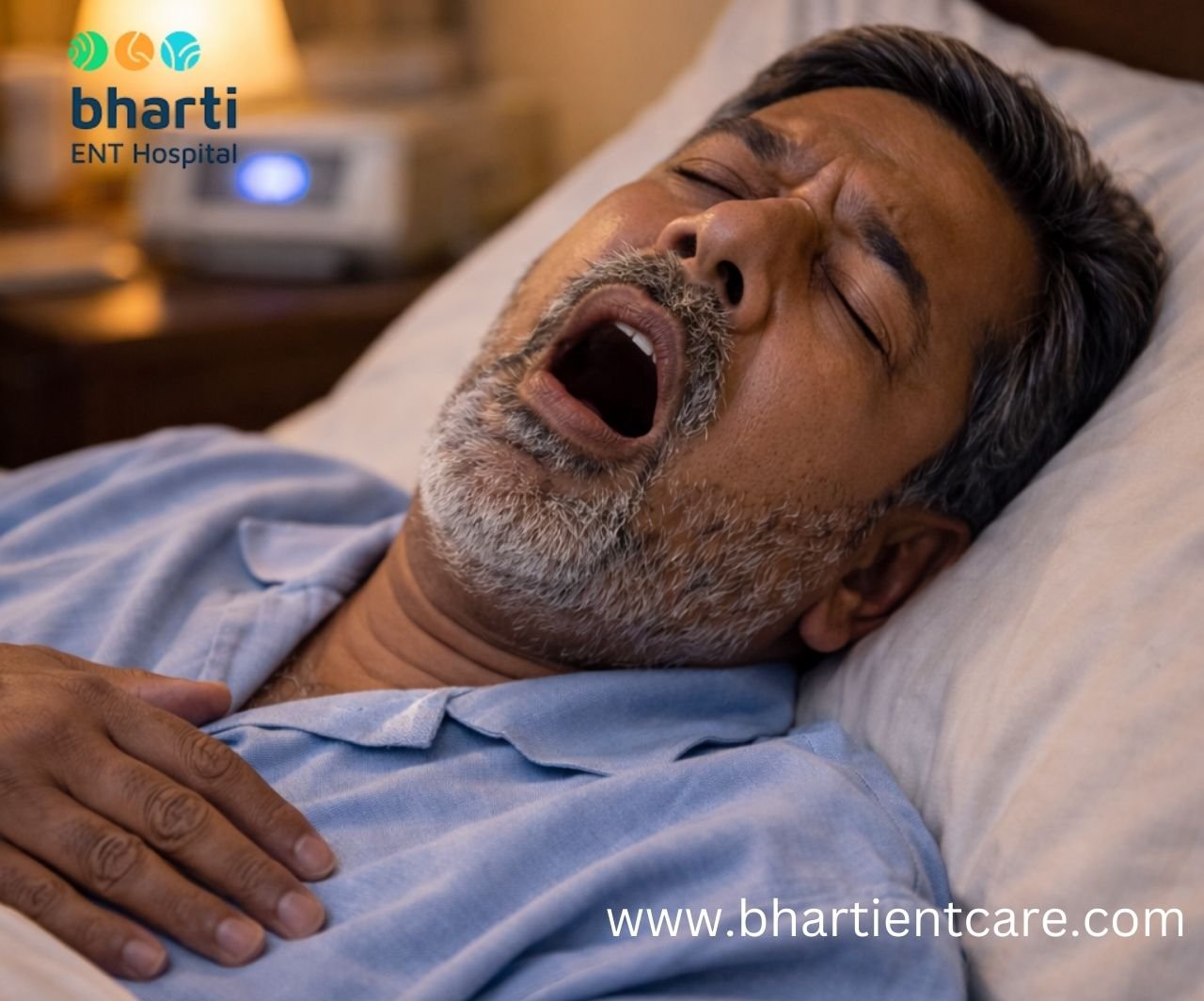
Sleep is an important health factor, but millions of individuals experience sleeping-related breathing disorders without the knowledge of it. At Bharti ENT Hospital, most patients turn to the hospital after having been affected by persistent fatigue, loud snoring, and interrupted sleep patterns which are greatly affecting their daily life. These symptoms are commonly associated with what can be referred to as sleep apnea, which is a disorder that interrupts the process of breathing as a person sleeps and does not allow the body to get the necessary oxygen.
This sleep apnea disorder is more than just snoring. It is a health condition which may influence the health of the heart, the functioning of the brain and the overall quality of life when unmanaged. As it largely concerns airway blockage, it is usually discussed as a sleep apnea, an ENT condition, i.e. it is likely to have structural problems with the nose, throat, or airway, which has to be assessed by an ENT specialist.
Learning about the symptoms, reasons, and treatment alternatives is one way of making patients aware of the condition, and they must ensure that they get the appropriate medical attention.
What is Sleep Apnea?
Sleep apnea refers to a condition where one experiences recurrent blocking of breath when asleep. Such pauses might take several seconds to more than one minute and can happen dozens or hundreds of times a night. Every interruption decreases the supply of oxygen to the body and briefly reawakens the brain to resume breathing.
Obstructive sleep apnea is the most prevalent form in which the airflow is obstructed by the loose throat muscles or structural defects. These breathing pauses may be very detrimental to the quality of sleep and health.
In healthy sleep, the throat muscles relax a bit so as to enable easy breathing. In sleep apnea, however, these muscles collapse excessively or air is blocked by an anatomical barrier. This causes recurrent incidences of breathlessness and intermittent gasping or choking in an attempt to reestablish normal breathing.
Is Sleep Apnea Dangerous
- Yes, untreated sleep apnea may cause severe health issues.
- Elevated risk of cardiovascular disease
- High blood pressure
- Stroke risk
- Accidents and daytime fatigue
- Loss of memory and concentration
The disorder may also lead to chronic fatigue because of the low quality of sleep.
Symptoms of Sleep Apnea
Early detection of sleep apnea symptoms will assist patients in getting timely treatment before they develop other complications.
The symptom that is most prevalent is loud, persistent snoring that can be quite irritating to other members of the household. Snoring is, however, not enough to identify sleep apnea. The main distinction is that patients with sleep apnea have breathing breaks and then they hear a choking or gasping noise.
Other symptoms may include:
- Several night awakenings
- Morning headaches
- Waking up with dry mouth or sore throat
- Lack of concentration during the day
- Mood changes or irritability
- Drowsiness during the day
Some people might not even know that they were interrupted in breathing at night. Family members usually observe an abnormal breathing pattern during sleep.
A second significant issue is sleep apnea affecting daily life. The untreated sleep apnea might lead people to have trouble with productivity, attention and emotional well being because of chronic fatigue.
Causes of Sleep Apnea
There are a number of anatomical and lifestyle factors that lead to sleep apnea. Knowledge of obstructive sleep apnea causes assists in knowing the right form of treatment.
Airway Obstruction: One of the most frequent causes is sleep apnea due to throat blockage, when the throat tissue collapses and blocks the airflow.
Nasal Obstruction: Nasal blockage in sleep apnea is another causal factor where the passages are obstructed with structural block like deviated septum, nasal polyps, or chronic sinusitis.
Other Risk Factors: These other risk factors include:
- Obesity
- Swollen tonsils or adenoids
- Thick neck circumference
- Smoking
- Drinking before bedtime
- Airway disorders history in family
All these factors could enhance airway resistance at the time of sleep, causing interruptions in breathing.
When to See a Doctor for Sleep Apnea
Snoring is a symptom that many individuals consider harmless; however, persistent symptoms must not be overlooked. An awareness of when to visit an ENT doctor to treat sleep apnea is a vital way of diagnosing and treating it.
Seek medical advice when you are experiencing:
- Snoring loudly, with breathing breaks
- Chronic daytime fatigue
- Morning headaches
- Difficulty concentrating
- Choking or gasping at night
A specialist assessment can involve a sleep test, nasal test, and airway test to identify the precise cause.
Early identification can be used to avoid long-term issues and raise the quality of sleep to a considerable degree.
Sleep Apnea Treatment Options
Treatment is aimed at restoring normal airflow in sleep and avoiding breathing disruptions. The best treatment for sleep apnea depends on the severity of the disorder and the cause.
Lifestyle Modifications: In mild cases, lifestyle changes can be used to improve the symptoms. These are weight control, alterations in the sleeping position and not taking alcohol before sleep.
Medical Devices: Continuous Positive Airway Pressure (CPAP) pumps are usually recommended to maintain the airway open during sleep by providing pressurized air through a mask.
Surgical Treatment: When structural abnormalities are causing airway blockage, surgery to fix the abnormalities can be required.
Experts can suggest the following procedures:
- Nasal surgery for sleep apnea to repair deviated septum or remove obstructions
- Sinus surgery for sleep apnea to enhance airflow in the nose and decrease sinus blockages
Sleep apnea ENT surgical interventions are used during some instances to correct the blockage of the throat tissue to open up the correct breathing channels.
Is Sleep Apnea Curable
The solution lies in the cause of the problem.
- Mild cases can be treated by changes in lifestyle
- Structural causes may be fixed by surgery
- Long term management may be needed in cases of chronic conditions
Adequate assessment is a way of making sure that patients get the most appropriate treatment.
Snoring and Sleep Apnea Surgery
Advanced ENT is aimed at removing airway obstruction to enhance breathing during sleep.
The surgical treatment can include the fixation of an obstructed nose, removal of excess throat tissue, or expansion of the throat airspace. Such operations are minimally invasive and meant to recreate normal breathing habits.
The process can be summarized as:
- Full sleep analysis and airflow analysis
- Endoscopic or imaging analysis
- Determination of the site of blockage
- Surgery to correct obstruction of nose or throat
- Follow up and postsurgery care
These therapies are long term and offer relief to patients who do not respond to conservative therapies.
Why Choose Bharti ENT Hospital
Specialized ENT skills, advanced diagnostic technology, and up-to-date surgical procedures are useful for patients who want to find effective solutions to sleep apnea. A thorough assessment can guarantee the proper assessment of the airway obstruction causing the condition.
Individual therapy plans consider the individual anatomical and lifestyle variables of a patient. Patients are provided with effective solutions to enhance breathing and sleep quality, as well as well-being, with the help of knowledgeable specialists and patient-centered care.
The emphasis is made on reestablishing healthy sleep habits as well as reducing discomfort and recovery period.
Frequently Asked Questions (FAQs)
What is the duration of sleep apnea surgery?
The majority of the procedures take between one to two hours based on their complexity.
What is the duration required before patients resume normalcy?
The majority of people get back to normal activities in one or two weeks after surgery.
Can ENT doctors treat sleep apnea permanently?
Correction of anatomical blockages may give long term relief and greatly increase breathing during the sleep process.
Does the Bharti ENT Hospital treat sleep apnea?
Yes, the hospital has a Snoring and Sleep Apnea Clinic where sleep related breathing problems are checked and treated.